

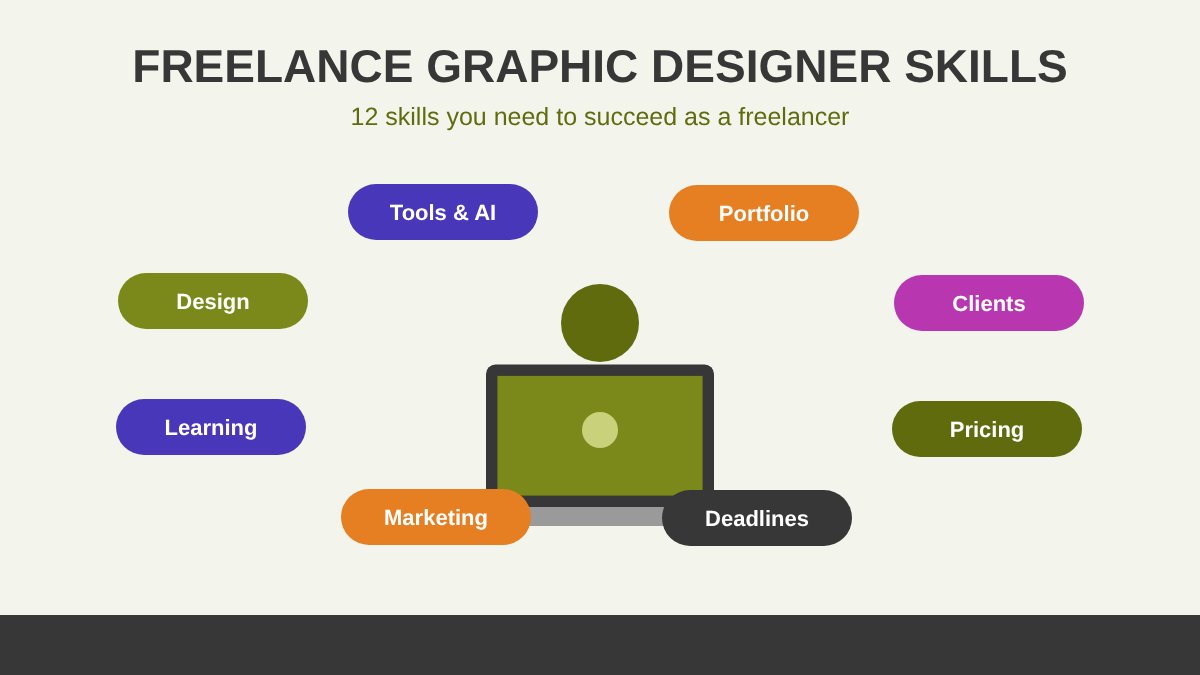
Why Freelancing Needs More Than Design Talent
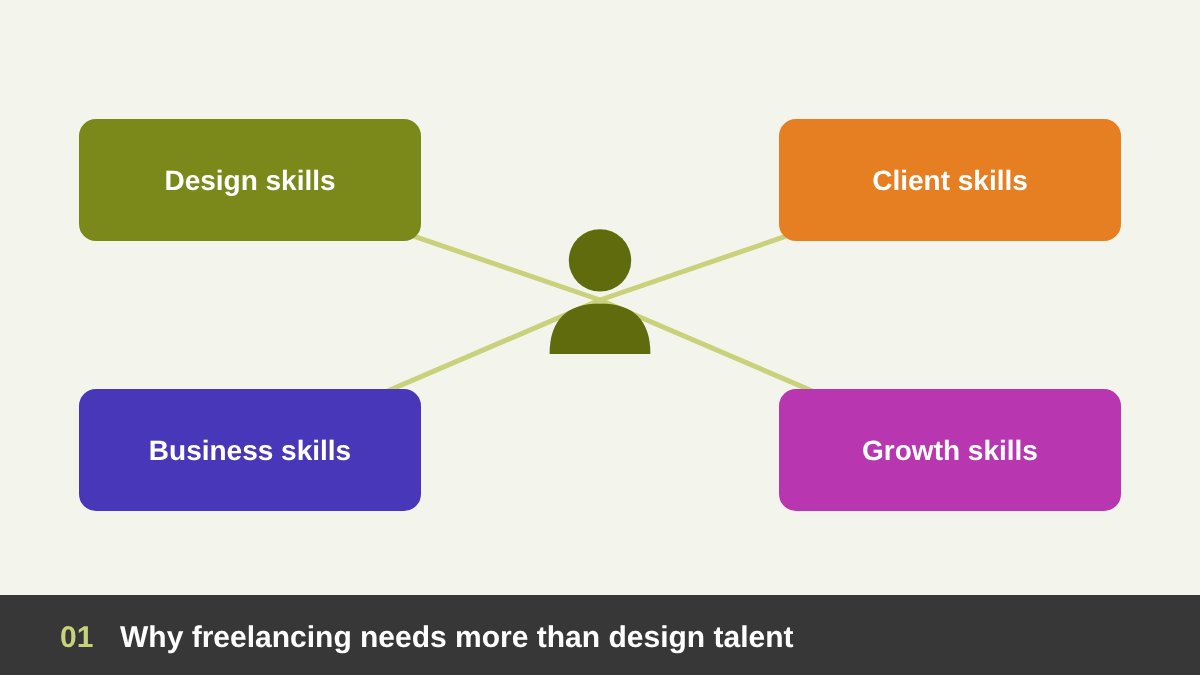
Many talented designers start freelancing and are surprised when the work does not come, or when it comes with stress, late payments and endless revisions. The reason is simple: being good at design is only one part of the job. The freelance graphic designer skills that really decide success are a mix of design ability, client skills, business skills and self-discipline. In a studio, other people handle the client, the price, the schedule and the invoice. As a freelancer, you are the designer, the account manager, the project manager and the accountant at the same time.
In this guide I share the skills every freelance graphic designer needs, based on my own years of working as a designer, an art director and a freelancer with clients in Egypt and the Gulf. I group them into four families: design skills, client skills, business skills and growth skills. For each one I explain why it matters and how you can practise it, so you can see clearly where you are strong and what to work on next.
| Skill | Why it matters | How to practise |
|---|---|---|
| Design fundamentals | Makes every piece clear and professional | Recreate great layouts, study typography and grids |
| Software and AI tools | Speed, quality and independence | Master Adobe and Figma, use AI for ideas, not as a shortcut |
| Portfolio | Wins the client before the first call | Show 10 strong case studies, update often |
| Brief and questions | Prevents misunderstandings and endless revisions | Use a fixed brief template, confirm it in writing |
| Communication | Builds trust and repeat clients | Clear updates, present ideas with context |
| Pricing and contracts | Keeps the work profitable and safe | Written scope, revision limits, deposit |
| Time management | Delivers on time with less stress | Weekly plan, task board, deadline buffers |
| Feedback handling | Protects the relationship and the project | Collect feedback in one list, apply in rounds |
| Self-marketing | Brings a steady flow of clients | Clear niche, regular posts, ask for referrals |
| Business and discipline | Stable income and no burnout | Invoices, savings, fixed routine |
| Continuous learning | Keeps your value growing | Weekly study time, new skills every year |
Strong Design Fundamentals
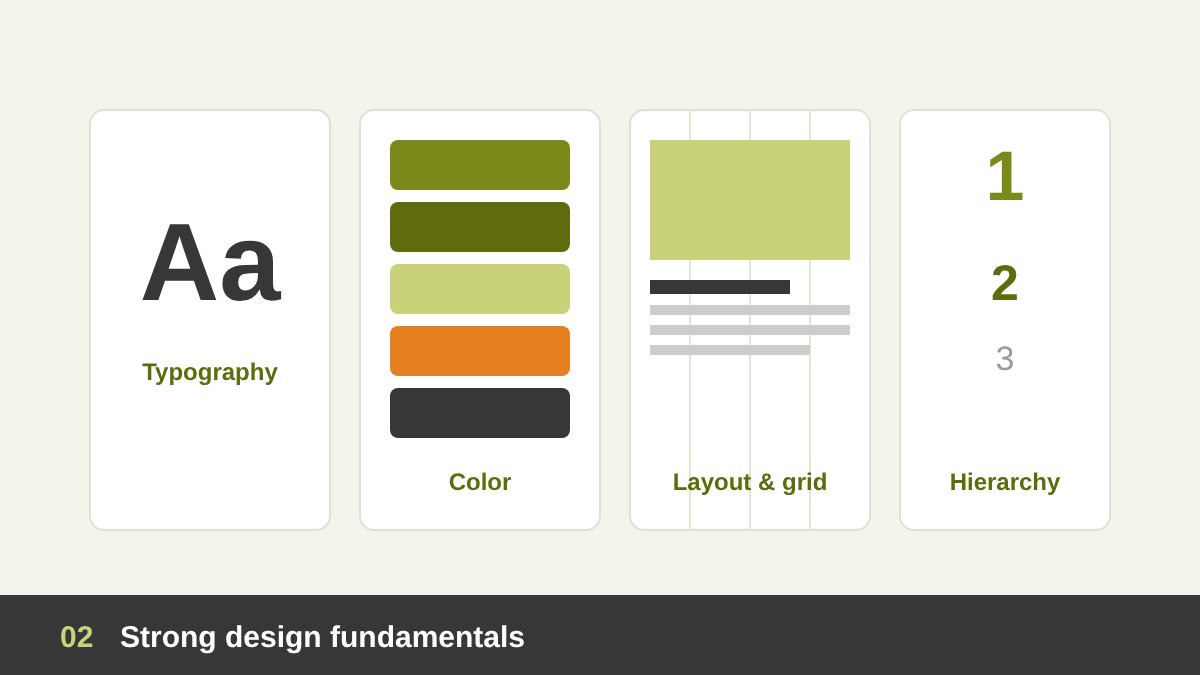
Everything starts with the basics. Clients do not hire a freelancer for software tricks; they hire someone who can make their message clear and attractive. That depends on the fundamentals of graphic design: typography, color theory, composition and grids, visual hierarchy, contrast and white space. A designer with strong fundamentals can work in any style, while a designer who only follows trends gets lost when the trend changes.
To strengthen these freelance graphic designer skills, study the work of great designers, recreate good layouts to understand why they work, and always ask yourself what the viewer should notice first, second and third. Learn to pair two typefaces well, to build a limited color palette, and to align everything to a grid. These habits make even a simple social media post look professional, and they are the base of every bigger project such as branding and logo design.
Mastering the Tools, Including AI
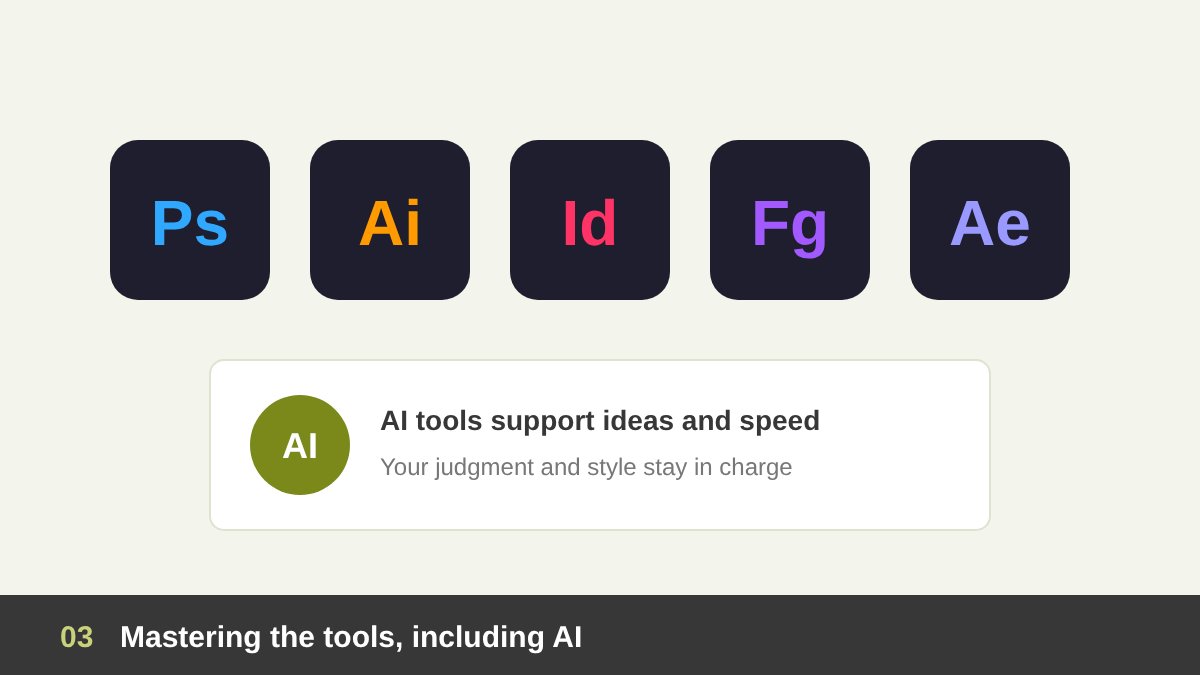
A freelancer must be fast and independent, so you need to master your tools well. The core set for most graphic designers is Adobe Photoshop for images, Illustrator for logos and vector work, and InDesign for multi-page layouts. Figma is now essential if you design websites, apps or social media systems, and basic After Effects skills open the door to motion work, which clients increasingly ask for.
AI tools are now part of the toolkit too. Use them to explore ideas quickly, generate mood boards, remove backgrounds or extend images, but never let them replace your thinking or your own style. Clients pay for judgment, not for buttons. If you want to build your software skills step by step, my free Photoshop course and Illustrator course lessons are a good place to start. Also learn file preparation properly: color modes, resolution, bleed and export formats, because a beautiful design with a broken print file is a failed project.
A Portfolio That Sells Your Work
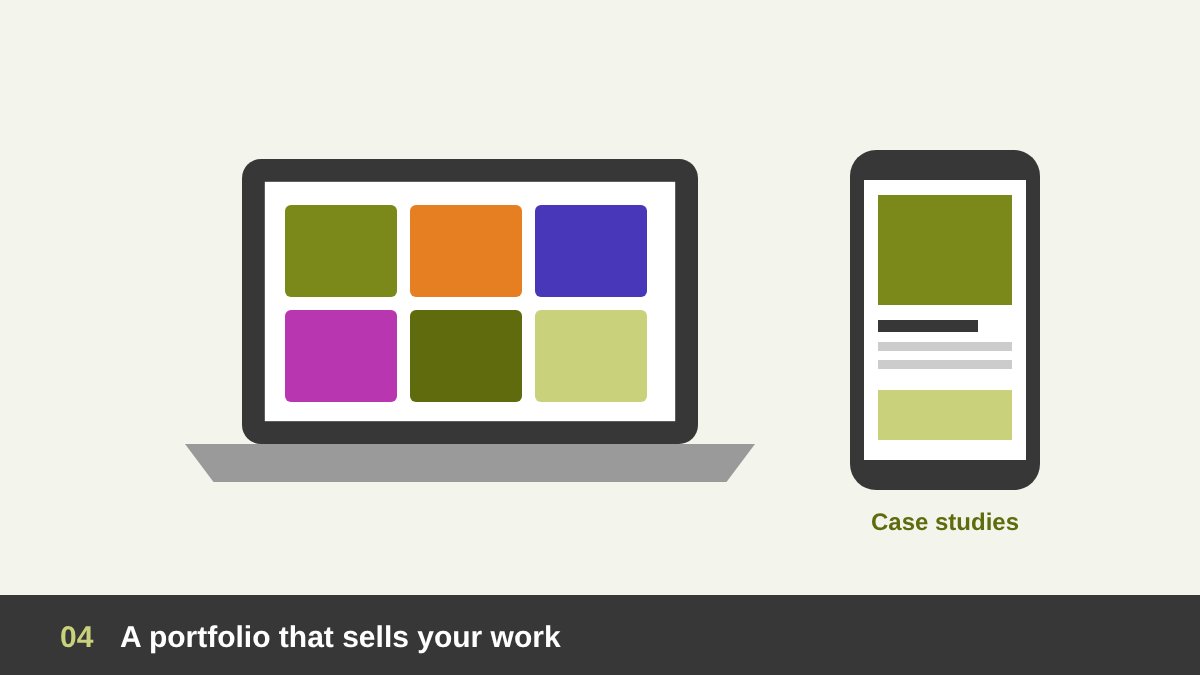
For a freelancer, the portfolio is the shop window and the sales person at the same time. Clients decide in seconds whether to contact you, so show only your best work, and show the kind of work you want to get more of. Ten strong projects are better than fifty average ones. Present each project as a short case study: the client’s problem, your idea, the process, and the final result shown on realistic mockups.
Keep your portfolio in places where clients look. A personal website gives you a professional image and helps you appear on Google, while platforms like Behance and Dribbble help other designers and agencies find you. Update it regularly and remove old work that no longer represents your level. You can see how I organise my own projects by field in my portfolio.
Understanding the Brief and Asking the Right Questions
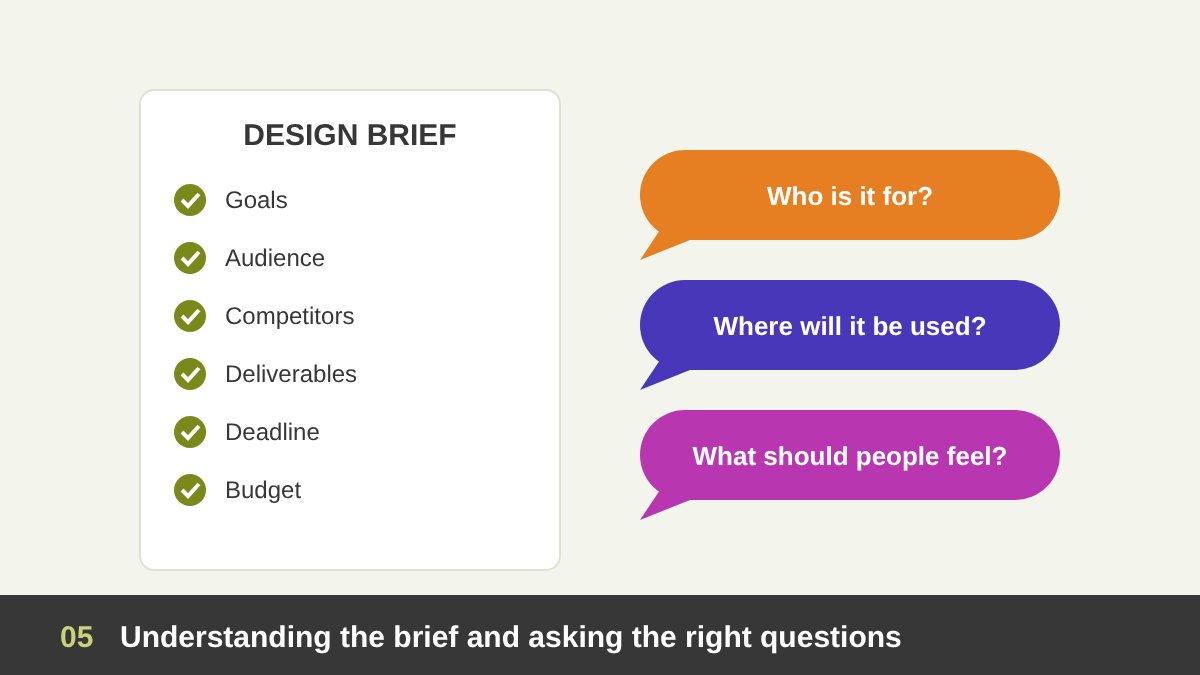
Many freelance problems start on the first day, with a brief that was never really understood. A strong freelance graphic designer knows how to turn a vague request like “I need a nice logo” into a clear brief. Ask about the business and its goals, the target audience, the competitors, the message, where the design will be used, the deliverables, the deadline and the budget. Ask for examples of designs the client likes and dislikes.
Then write the brief back to the client in a short summary and get their approval before you start designing. This small step protects both of you: the client feels understood, and you have a reference point when the project starts to drift. Good questions also make you look like a consultant, not just a pair of hands, and that is how freelancers move to better clients and higher fees.
Client Communication and Presenting Your Ideas
Communication is one of the most underrated freelance graphic designer skills. Clients choose and recommend the designers who reply on time, explain things simply and keep them informed. Set clear working hours and response times, use one main channel for the project, and send short updates at each milestone so the client never wonders what is happening.
Presentation is part of communication. Never send a design as a single file with “what do you think?”. Present it with context: remind the client of the goal, show the design in real use on mockups, and explain in a few sentences why each decision supports the goal. A well-presented concept gets approved faster and receives more useful feedback. This is a skill I practise every day as an art director, and I write more about it in the art of managing graphic design.
Pricing, Quotes and Contracts
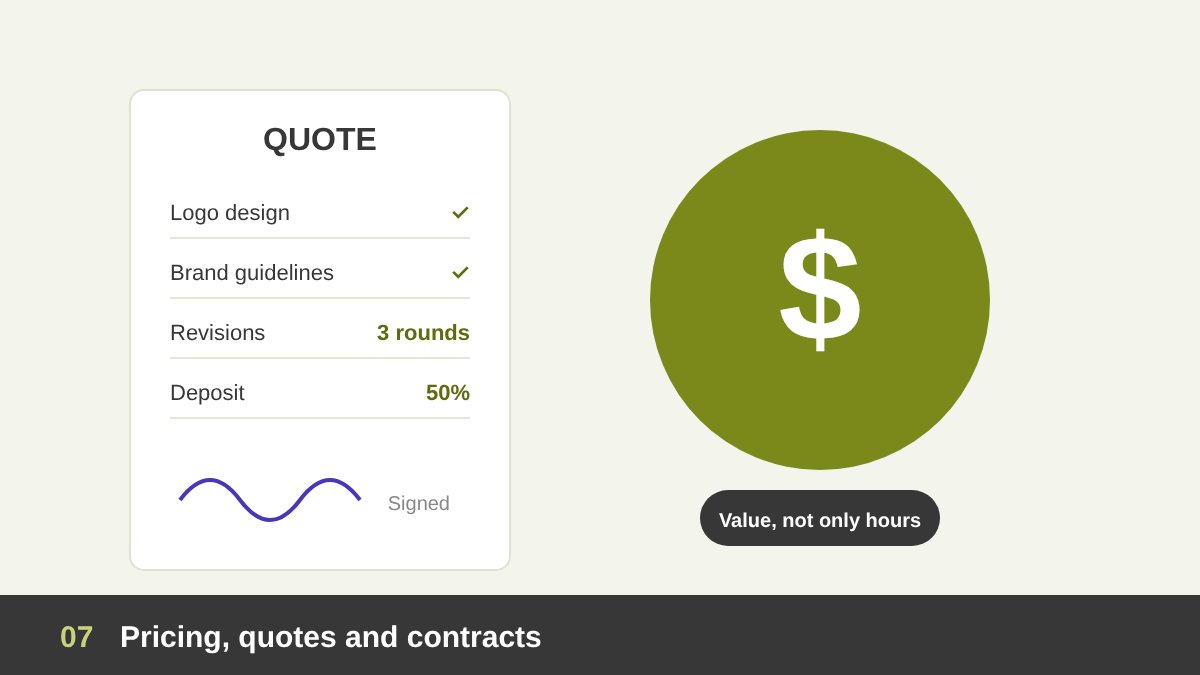
Pricing is where many freelancers lose the most money. Some charge too little because they are afraid to lose the client, others quote a number without understanding the scope. Learn to estimate the time a project really needs, include research, revisions, meetings and file preparation, and decide whether a fixed project price, a day rate or a monthly retainer suits the job. As you grow, price on the value you create, not only on the hours you spend.
Always put the agreement in writing, even for small jobs. A simple contract or a detailed quote should state the deliverables, the number of revision rounds, the timeline, the payment terms, the deposit and who owns the final files. Asking for a deposit of 30 to 50 percent before starting is normal and professional. Clear terms do not scare good clients away; they make you look serious and protect you from the clients you do not want.
Time Management and Meeting Deadlines
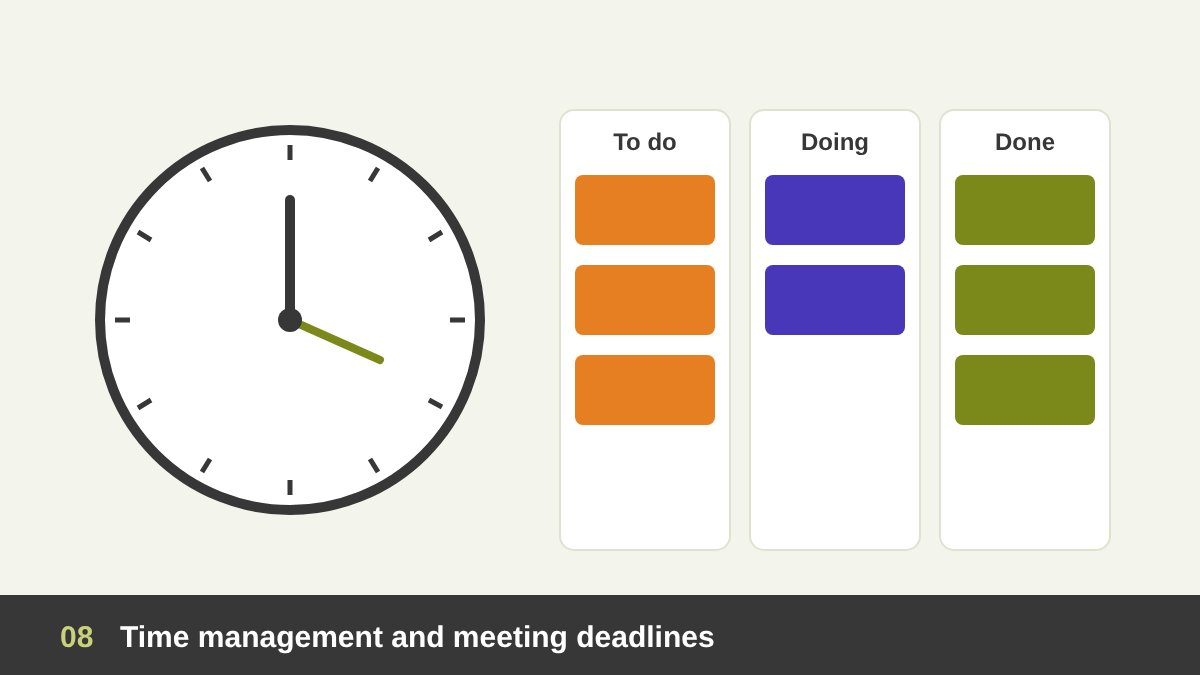
No manager will remind you of your deadlines, and several clients may need you in the same week. Good time management is therefore one of the most practical freelance graphic designer skills. Plan your week in advance, break each project into small tasks with their own dates, and use a simple tool such as a calendar, Trello or Notion to see all your projects in one place.
Protect deep work time for creative tasks, and handle emails and messages in fixed blocks instead of all day long. When you quote a deadline, add a buffer for feedback and unexpected problems, because it is always better to deliver early than to apologise for being late. Reliability is a competitive advantage: clients come back to the designer they can count on, even when others are cheaper.
Handling Feedback and Revisions Professionally
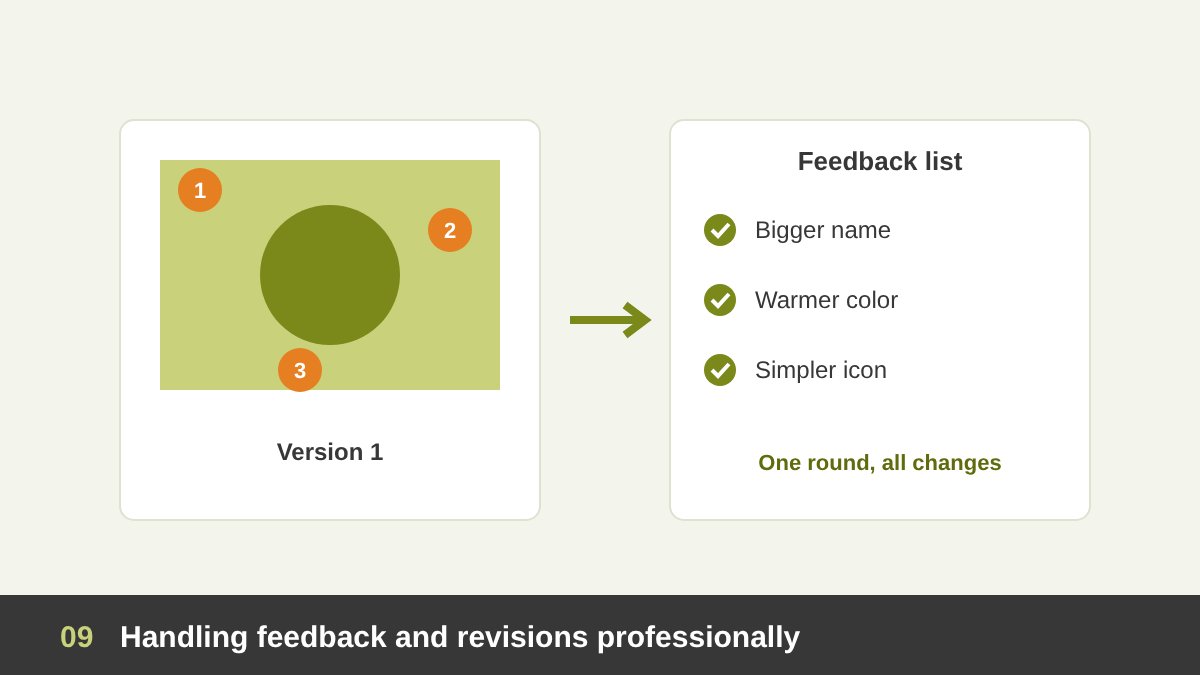
Feedback is part of every design project, and the way you handle it shapes your reputation. Separate yourself from the work: a comment on the design is not a comment on you. Listen for the problem behind the request. When a client says “make the logo bigger”, they may really mean “I am not sure people will notice our name”, and there may be a better solution than simply enlarging it.
Collect feedback in one written list, confirm it, then apply it in one round instead of many small changes. If requests go beyond the agreed revisions or change the brief, explain kindly that this is extra work and quote it. Being flexible but clear keeps the relationship positive and keeps the project profitable. Saying “no” politely, with a reason and an alternative, is a professional skill, not a weakness.
Marketing Yourself and Building a Personal Brand
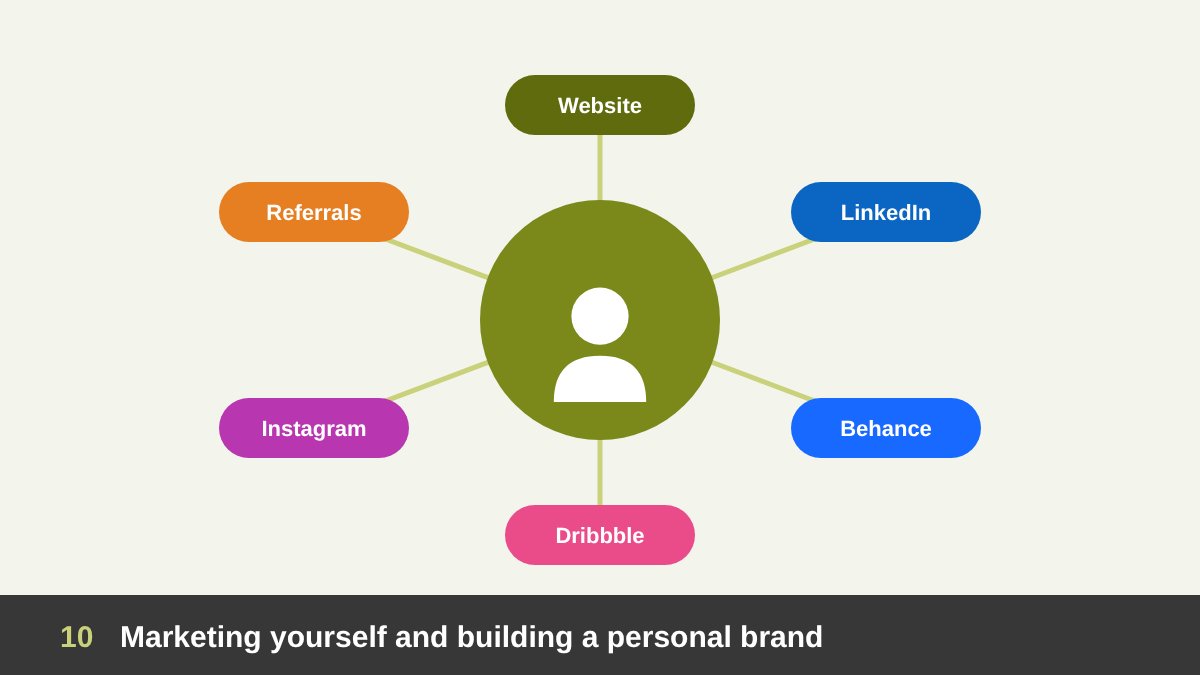
A freelancer without marketing is a freelancer without clients. You do not need a big budget, but you need a clear position: who you help and with what. “Brand identity for real estate companies” or “social media design for restaurants” is easier to remember and to recommend than “I do everything”. Choose one or two specialisms, and let your portfolio, your profiles and your content all say the same thing. If you are not sure which direction fits you, my guide to graphic design job titles explains the main paths.
Share your work and your process regularly on LinkedIn, Instagram, Behance and Dribbble, write useful posts about your field, and keep in touch with past clients. Most good freelance work comes from referrals, so ask happy clients for testimonials and introductions. Marketing yourself is simply applying your branding skills to your own business, in the same way you would build a brand for a client.
Business, Money and Self-Discipline
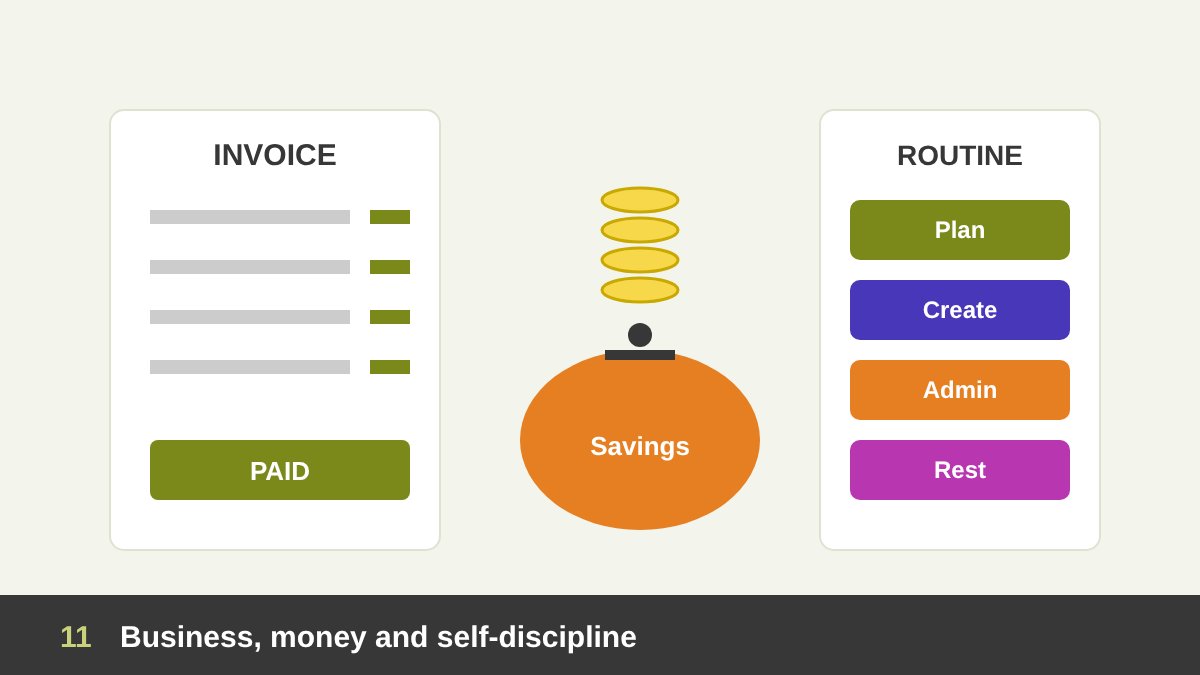
Freelancing is a small business, so you need basic business skills. Send clear invoices on time, follow up on late payments politely but firmly, and keep a simple record of income and expenses. Because freelance income goes up and down, save an emergency fund of a few months of expenses, put aside money for taxes, and budget for software subscriptions, equipment and training.
Self-discipline holds everything together. Keep a fixed routine, a separate place to work, and clear boundaries between work and rest, so you stay productive without burning out. Look after your health and your eyes, because long hours at the screen add up. Freelancing gives you freedom, and freedom only works when you manage yourself as seriously as a good employer would.
Keep Learning and Growing
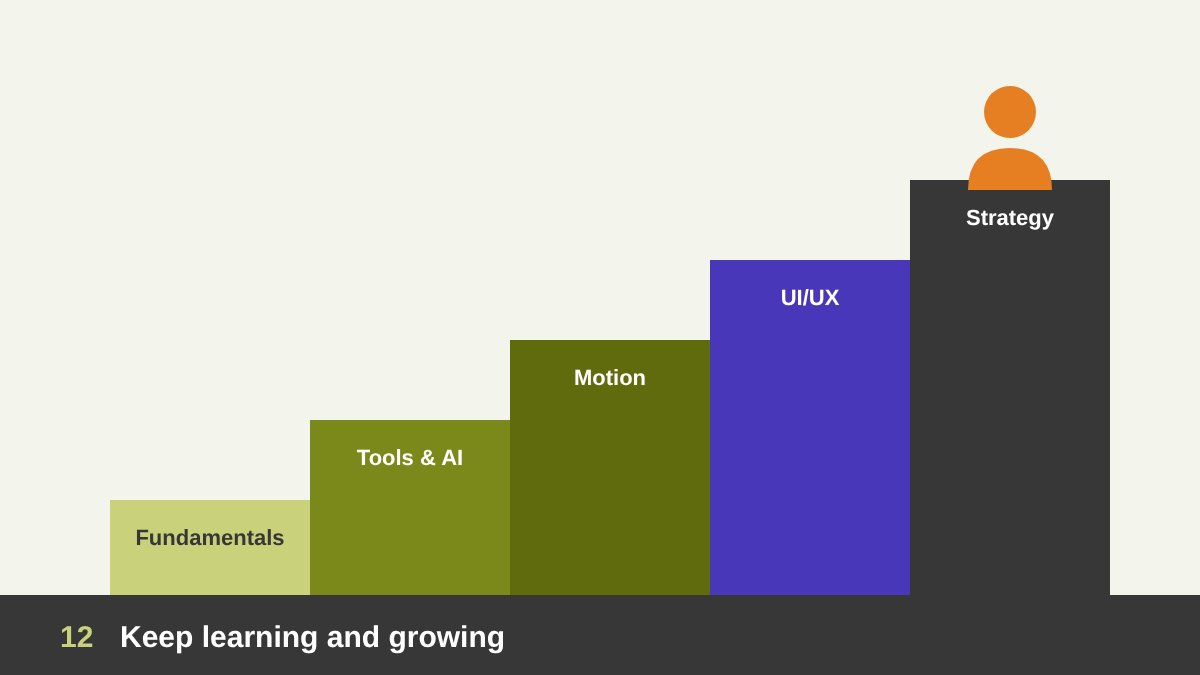
The design industry changes quickly: new tools, new platforms, new client expectations and now AI. The last of the essential freelance graphic designer skills is the ability to keep learning. Set aside a few hours every week to study, take one course or personal project every few months, and add skills that raise your value, such as motion graphics, UI/UX and web design, or brand strategy. Ask for feedback from designers you respect, and look at your old work to see how far you have come.
To sum up, successful freelancing rests on four pillars: solid design skills, clear communication with clients, sound business habits, and constant growth. You do not need to master all of them on the first day. Pick the one or two weakest skills from this list and improve them this month, then the next. If you are a business looking for a reliable freelance designer for branding, web or graphic design, or a designer who wants advice on building a freelance career, get in touch with me.
Freelance Graphic Designer Skills: Frequently Asked Questions
What skills does a freelance graphic designer need?
A freelance graphic designer needs design fundamentals, strong software skills, a good portfolio, the ability to understand a brief, clear client communication, pricing and contract skills, time management, professional handling of feedback, self-marketing, basic business and money management, and the habit of continuous learning.
Is design talent enough to succeed as a freelancer?
No. Talent and design skills are the base, but most freelancers fail because of weak communication, poor pricing, missed deadlines or no marketing. The business and client skills are just as important as the design work.
How do I find my first clients as a freelance graphic designer?
Start with a small but strong portfolio, tell your network what you do, choose a clear niche, share your work on LinkedIn, Behance and Instagram, and ask every happy client for a testimonial and a referral.
Should a freelance graphic designer learn AI tools?
Yes. AI tools help you explore ideas, prepare mockups and save time on repetitive tasks. Use them to support your creativity and judgment, not to replace them, and always check the quality and rights of any generated image.
How many revisions should a freelance designer offer?
Most freelancers include two or three revision rounds in the price. Write the number in the quote or contract, and charge for extra rounds or for changes that go beyond the original brief.