

Branding vs Logo Design: Why People Mix Them Up
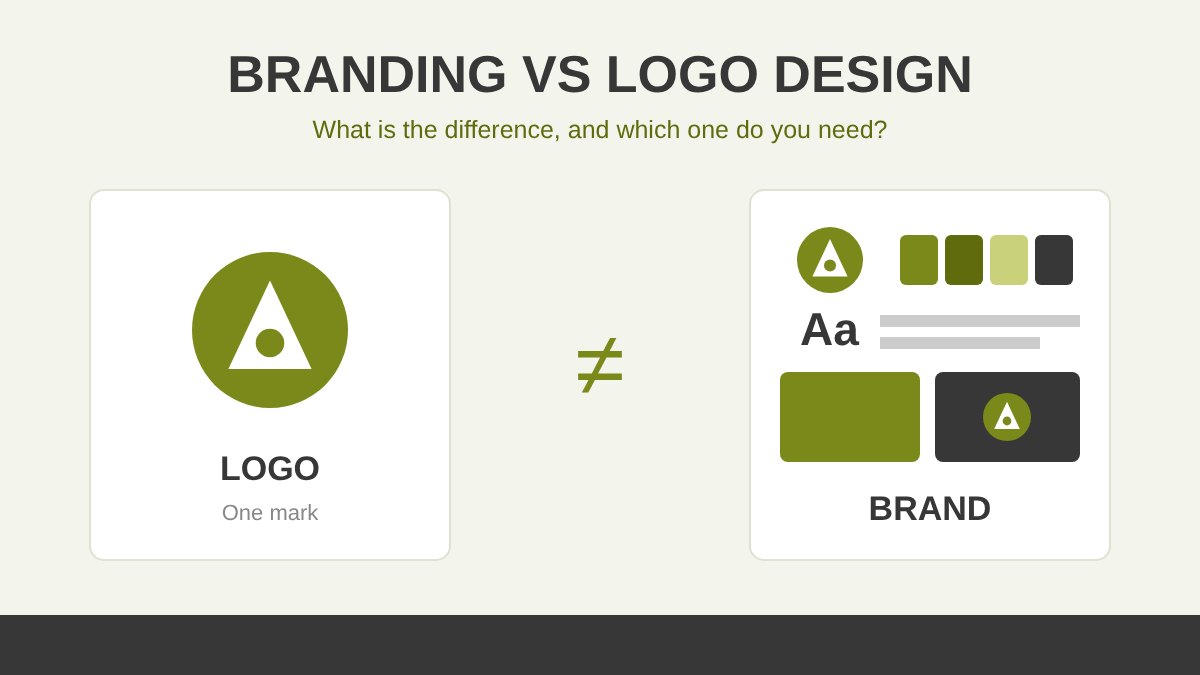
Branding vs logo design is one of the most common questions I hear from clients. Many business owners ask for “a logo” when what they really need is a brand, and others pay for “branding” and receive only a logo file. The two words are related, but they are not the same thing. A logo is one important piece, while branding is the whole system of ideas, visuals and experiences that make people recognize and trust a business.
In this guide I explain the difference between branding and logo design in simple language, show what each one includes, walk through the process of both, and help you decide which one your business needs right now. After many years of working on logo design and brand identity projects as a designer and art director, I have learned that understanding this difference early saves time, money and a lot of frustration.
What Is Logo Design?
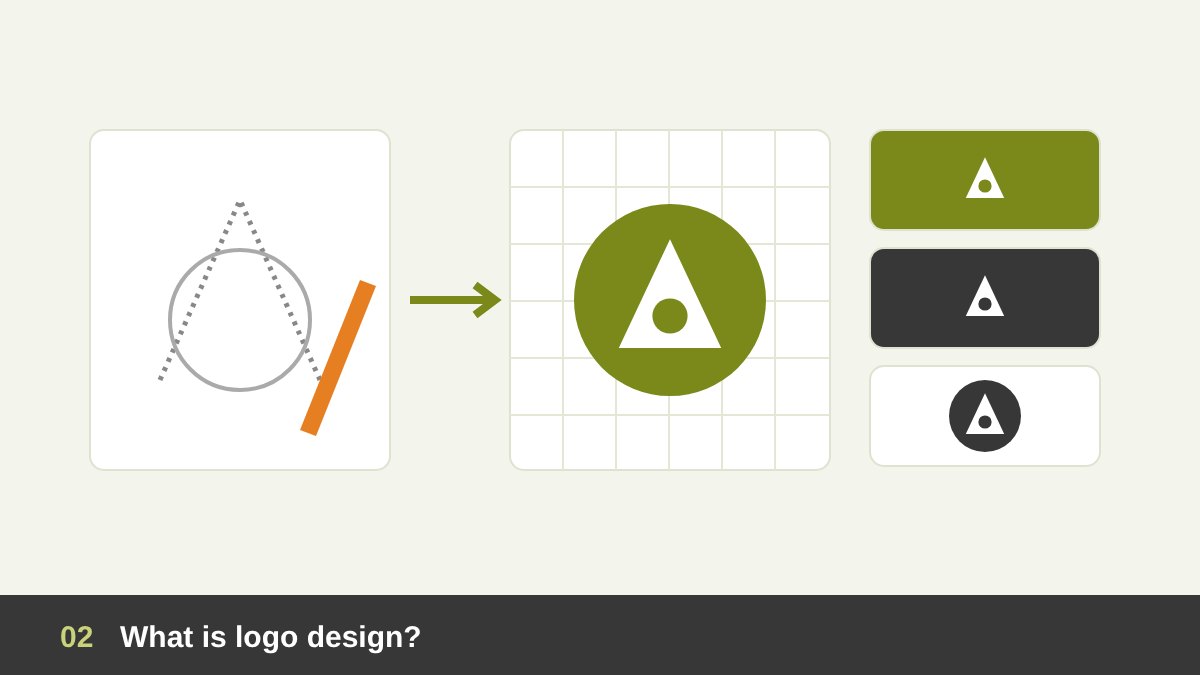
Logo design is the craft of creating a symbol, a wordmark or a combination of both that identifies a business. A good logo is simple, memorable, works in one color, and stays clear at very small and very large sizes, from a mobile app icon to a building sign. The main types are wordmarks (the name set in a special typeface), lettermarks (initials), pictorial marks (an icon), abstract marks, emblems and combination marks.
A professional logo design project usually includes research, sketching, several concepts, refinement, and a final package: the main logo, horizontal and stacked versions, an icon, color and black-and-white versions, and files for print and web. That is a real piece of design work, but it answers only one question: how do people recognize your name?
What Is Branding?

Branding is much bigger. It is the process of shaping how people think and feel about a business. Branding starts with strategy: what the company stands for, who it serves, how it is different from competitors, and what personality and tone of voice it should have. From that strategy comes the visual identity, which includes the logo, but also colors, typography, imagery, icons, patterns and layouts.
Branding also covers every point where a customer meets the business: the website, social media, packaging, the shop, the invoice, even the way the phone is answered. When all of these speak the same language, the business looks professional and becomes easy to remember. So when we compare branding vs logo design, the logo is a tool, and branding is the strategy and system that tells you how to use that tool.
The Iceberg: The Logo Is Only the Tip

I like to explain branding vs logo design with the image of an iceberg. The logo is the small part above the water that everyone sees. Under the water is the much larger part that holds it up: the mission and values, the target audience, the positioning, the brand story, the tone of voice and the customer experience.
A beautiful logo without this foundation is like a nice sign on an empty shop. It may look good in the portfolio, but it does not tell customers why they should choose you. On the other hand, a strong brand can make even a simple logo feel powerful, because people connect the mark with a clear promise and a consistent experience.
Branding vs Logo Design: The Key Differences
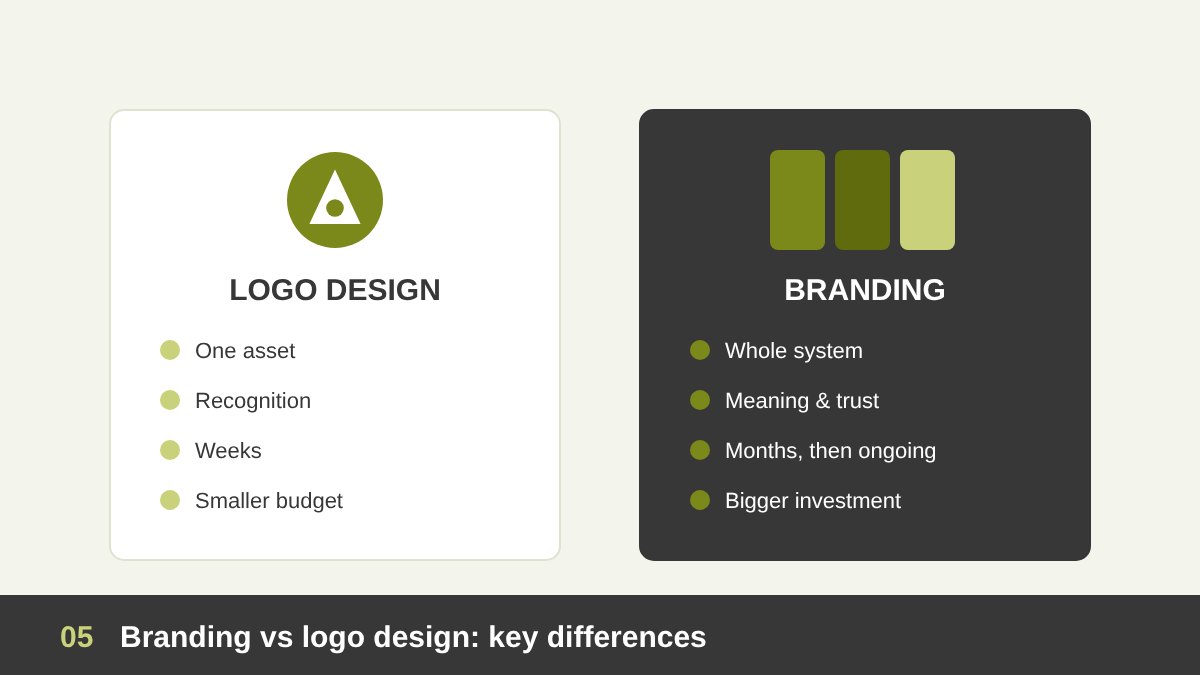
Here is a quick summary of the main differences. The logo answers “who is this?”, while branding answers “why should I care, and what can I expect?”. A logo design project is focused and can be finished in a few weeks. A branding project is wider, takes longer, and continues to grow with the business.
| Logo design | Branding | |
|---|---|---|
| What it is | A symbol or wordmark that identifies the business | The full system of strategy, identity and experience |
| Main question | Who is this? | Why should I choose them, and what can I expect? |
| Includes | Logo versions, colors, file formats | Strategy, logo, colors, typography, imagery, voice, guidelines, applications |
| Time | A few weeks | Several weeks to months, then ongoing |
| Best for | New ideas, events, small budgets | Serious launches, growth, rebranding, competitive markets |
What a Complete Brand Identity Includes
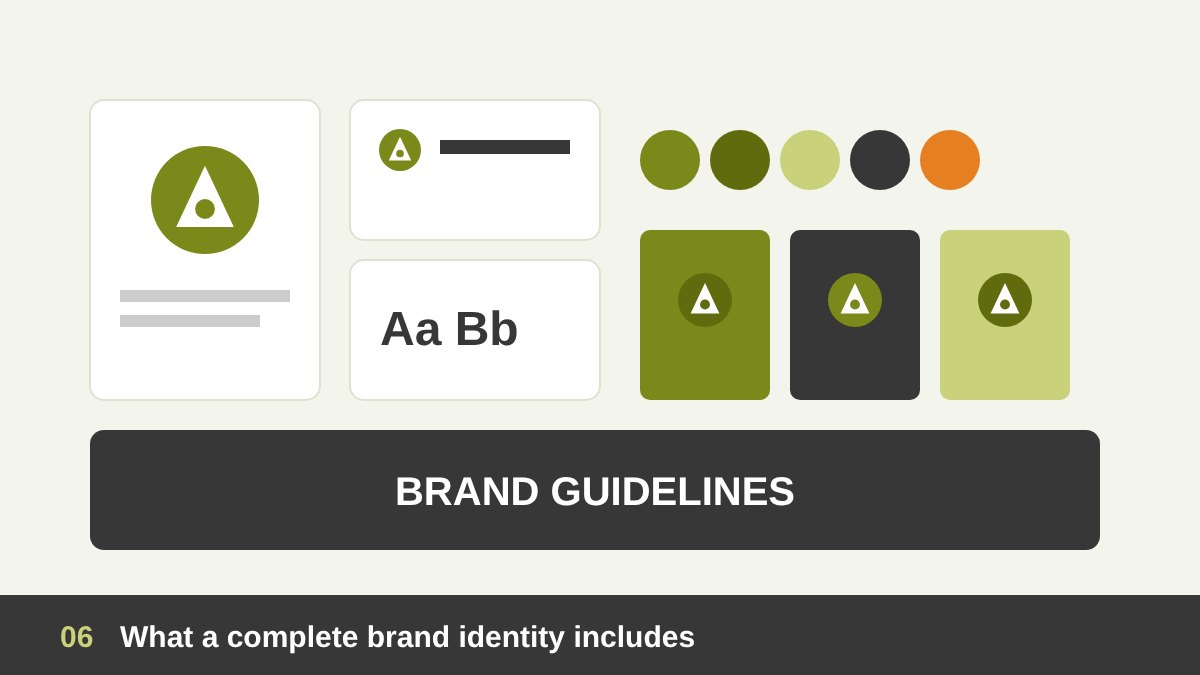
When I deliver a brand identity, the logo is the first item in a much longer list. A complete visual identity usually includes the primary and secondary logos, a color palette with exact codes for print and screen, a typography system for headings and text, a photography or illustration style, icons and graphic patterns, and templates for business cards, letterheads, presentations and social media posts.
All of this is collected in a brand guidelines book. The guidelines explain the rules: the clear space around the logo, what not to do with it, how to combine colors and fonts, and how the brand should look in different situations. This document is what keeps a brand consistent when many designers, printers and marketing teams work on it over the years.
The Branding Process Step by Step
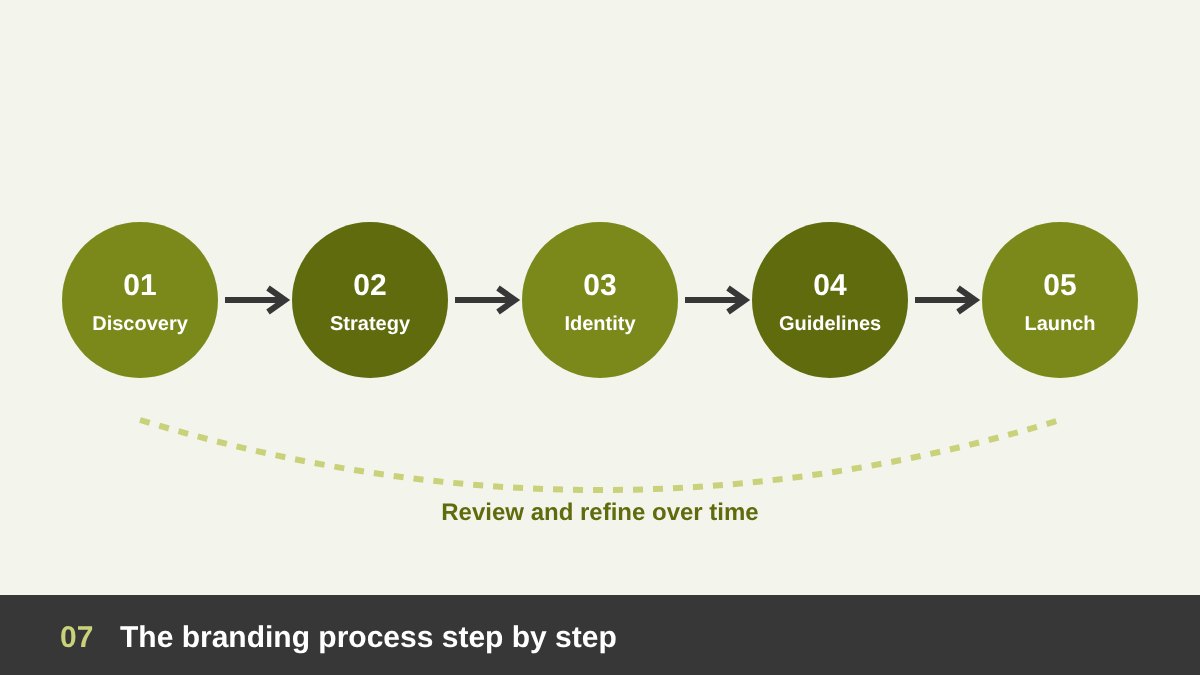
A professional branding process normally moves through five stages. First comes discovery: interviews with the owner, research into the market, the audience and the competitors. Second is strategy: defining the positioning, the brand personality, the key messages and sometimes the name. Third is identity design, where the logo design and the full visual language are created together so they fit each other.
Fourth is the brand guidelines, which turn the decisions into clear rules. Fifth is the launch and application: website, social media, signage, packaging and stationery. Good branding does not end at launch. The best brands are reviewed and refined over time, while staying recognizable. As an art director, this is where I spend most of my energy: making sure every new piece stays true to the brand. You can read more about that role in my article on the art of managing graphic design.
The Logo Design Process
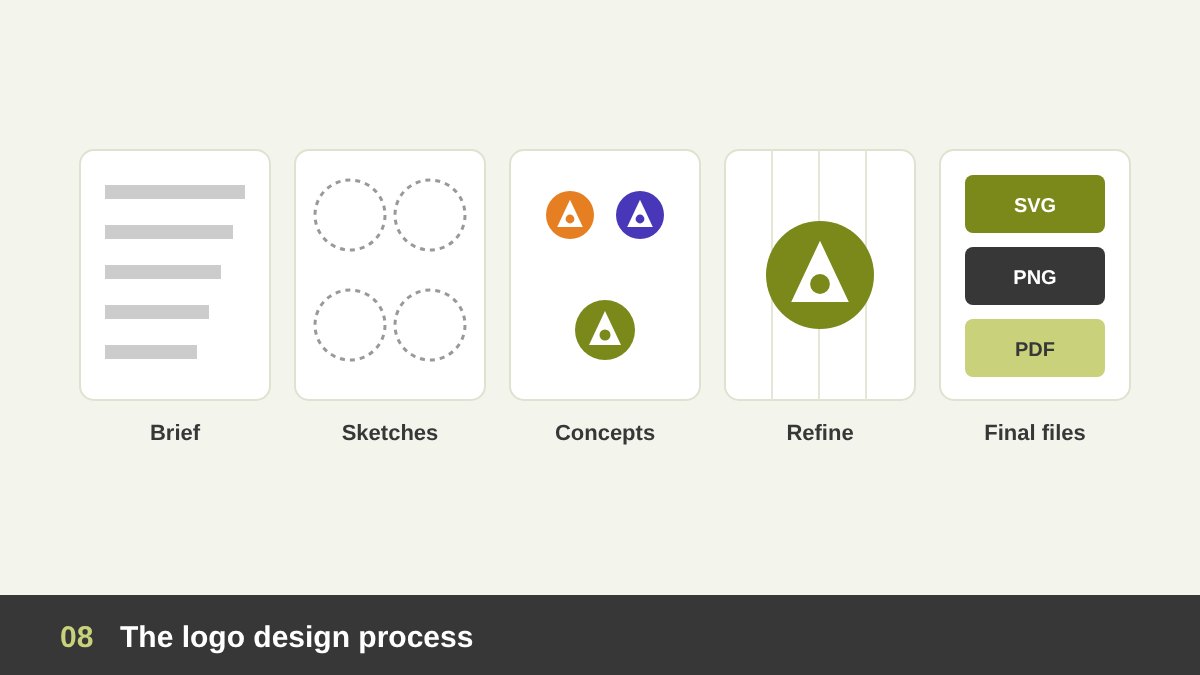
Logo design has its own process inside the branding process, or on its own when a client only needs a mark. It starts with a design brief: the name, the business, the audience, the feelings the logo should express and any colors or symbols to use or avoid. Then come pencil sketches, because ideas are faster on paper than on the computer.
The strongest sketches become digital concepts, usually two or three directions, which are presented on real mockups so the client can imagine them in use. After feedback, one direction is refined: the shapes, the spacing, the typography and the color. Finally the logo is tested in small sizes, in one color and on dark backgrounds, and delivered in all the needed formats. You can see examples of both logo design and full brand identity projects in my logo and branding portfolio.
When a Logo Is Enough and When You Need Branding
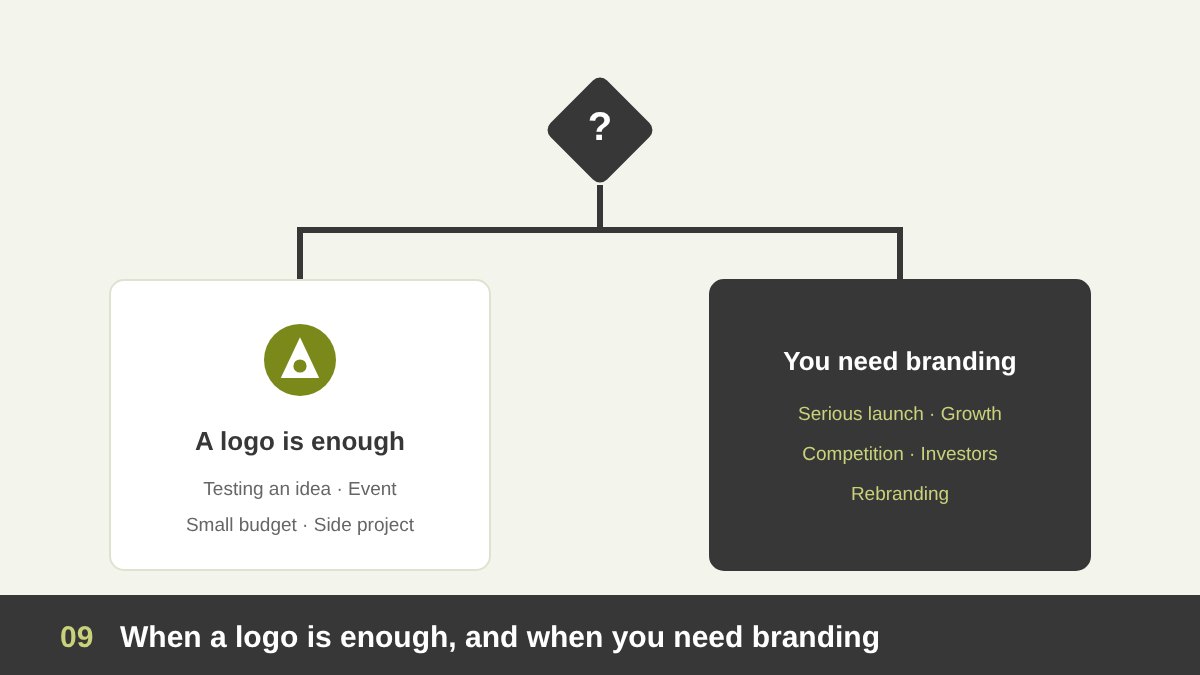
So, in the branding vs logo design decision, which one should you choose? A logo alone can be enough for a small start-up testing an idea, a personal side project, an event, or a business with a very small budget that needs to start quickly. In these cases, a clean, well-designed logo plus one or two colors is a good first step, and you can build the brand around it later.
You need full branding when you are launching a serious company, entering a competitive market, raising prices, opening several branches, preparing for investors, or when your current look feels inconsistent and customers do not remember you. Branding is also essential for rebranding projects, when a company has grown and its old identity no longer represents it, like my Nagy Elsayegh rebranding project.
Common Mistakes in Branding and Logo Design

The most common mistake is designing the logo before knowing what the brand stands for. Without strategy, the logo design becomes a matter of personal taste, and decisions change with every opinion. Other mistakes are following trends that will look old in two years, using too many colors or fonts, choosing a logo that is too detailed to read at small sizes, and copying competitors instead of standing out from them.
On the branding side, the biggest mistake is having no guidelines. A business spends money on a great identity, then every new flyer and post is designed in a different style, and the brand slowly loses its strength. Consistency is what turns design into recognition, and recognition into trust.
How Much Do Branding and Logo Design Cost?

Prices vary a lot between countries, designers and agencies, so I will not give fixed numbers. What matters is the relationship between the two. A logo design project is the smaller investment, because the scope is limited to one asset and its versions. A branding project costs more because it includes research, strategy, a complete visual system, guidelines and often many applications.
Think of it as an investment rather than a cost. A logo that has to be redone after a year, or a brand that nobody remembers, is far more expensive in the long run. When you compare offers, compare the deliverables and the process, not only the price, and ask to see real projects the designer has done.
Final Thoughts: Start With the Brand, Then the Logo

The difference between branding vs logo design is the difference between a part and the whole. Your logo is the face of your business, but your brand is its personality, its promise and its experience. The best results come when the logo design grows out of a clear brand strategy, and when the identity is applied consistently everywhere.
If you are planning a new business or feel that your current identity no longer fits, start by answering the brand questions first, then design the logo. And if you want help with your logo design or a full branding project, get in touch with me. If you are a designer thinking about specialising in this area, my guide to graphic design job titles explains where brand identity designers fit in the design career ladder.
Branding vs Logo Design: Frequently Asked Questions
Is a logo the same as a brand?
No. A logo is one visual element of a brand. The brand includes the strategy, the values, the personality, the visual identity and the experience customers have with the business.
Should I design my logo or my branding first?
Start with brand strategy, even a short one, then design the logo. The logo should express what the brand stands for, not the other way around.
What is included in a branding package?
Usually brand strategy, a logo with its versions, a color palette, typography, imagery style, graphic elements, stationery and social media templates, and a brand guidelines book.
Can I start with only a logo and add branding later?
Yes. Many small businesses start with a logo and a few colors, then invest in full branding when they grow. Just make sure the first logo is simple and flexible enough to build on.