Category: Blog

Articles by Mahmoud Nasr on graphic design, branding, color theory, composition, human anatomy for artists, painting techniques and art history.

  • Branding vs Logo Design: What Is the Difference and Which Do You Need?

    Branding vs Logo Design: What Is the Difference and Which Do You Need?

    Branding vs Logo Design: Why People Mix Them Up
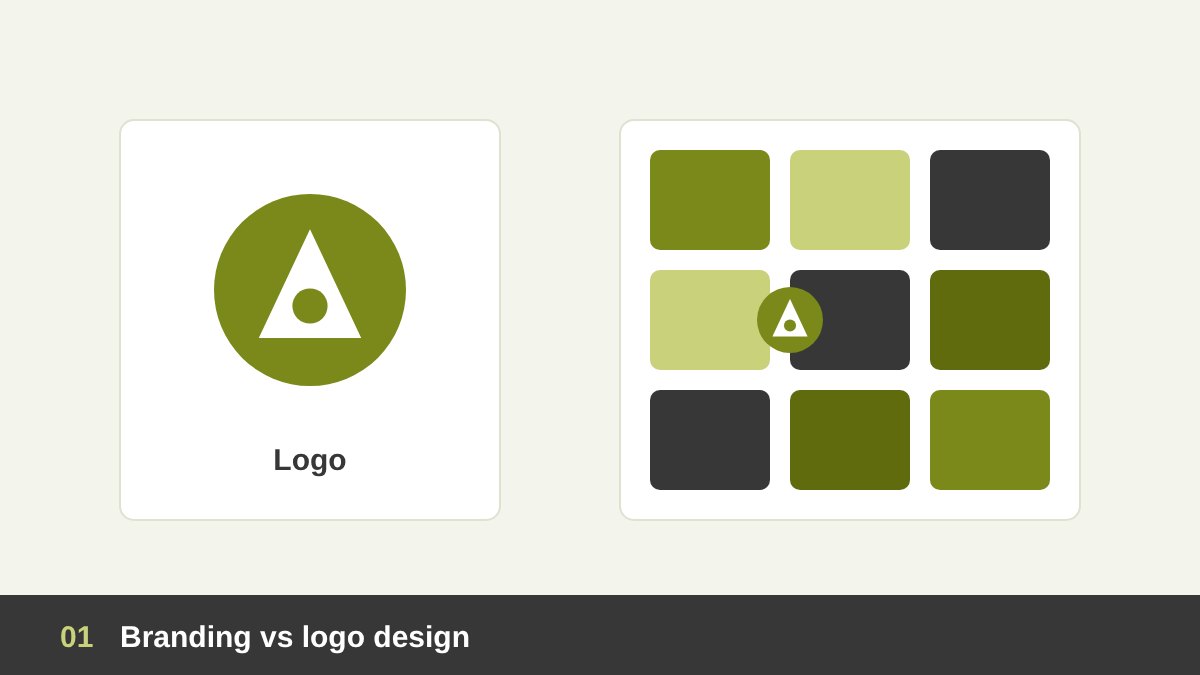
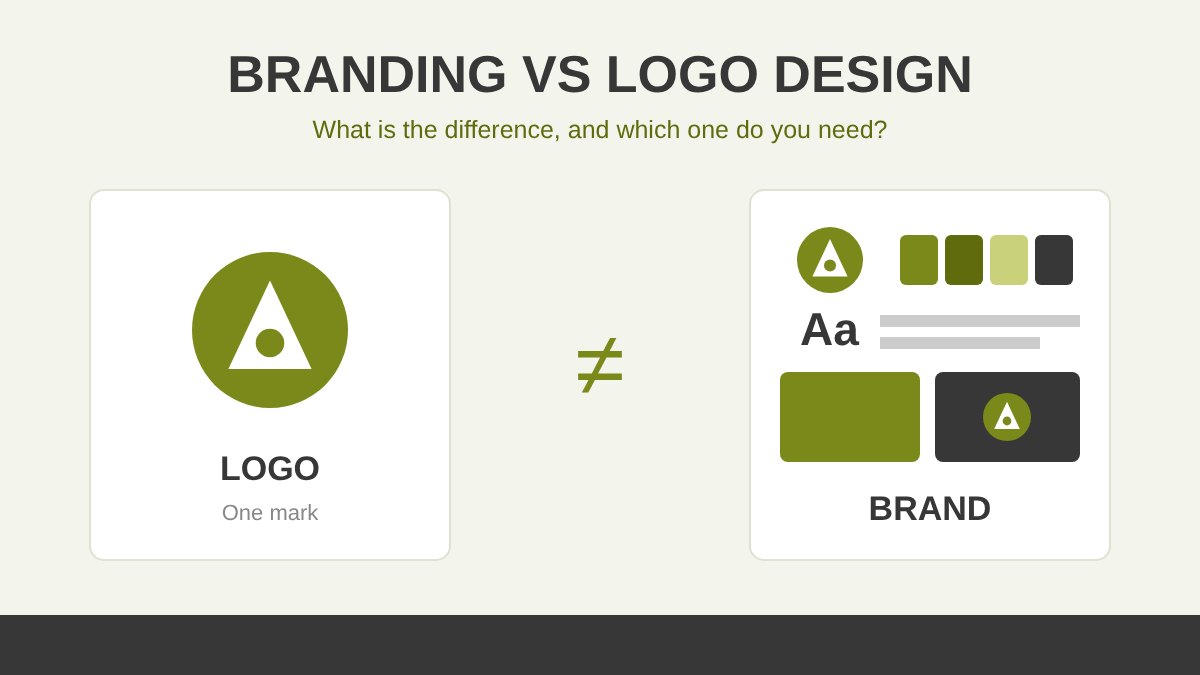
    Branding vs logo design: a single logo compared with a full brand identity system

    Branding vs logo design is one of the most common questions I hear from clients. Many business owners ask for “a logo” when what they really need is a brand, and others pay for “branding” and receive only a logo file. The two words are related, but they are not the same thing. A logo is one important piece, while branding is the whole system of ideas, visuals and experiences that make people recognize and trust a business.

    In this guide I explain the difference between branding and logo design in simple language, show what each one includes, walk through the process of both, and help you decide which one your business needs right now. After many years of working on logo design and brand identity projects as a designer and art director, I have learned that understanding this difference early saves time, money and a lot of frustration.

    What Is Logo Design?
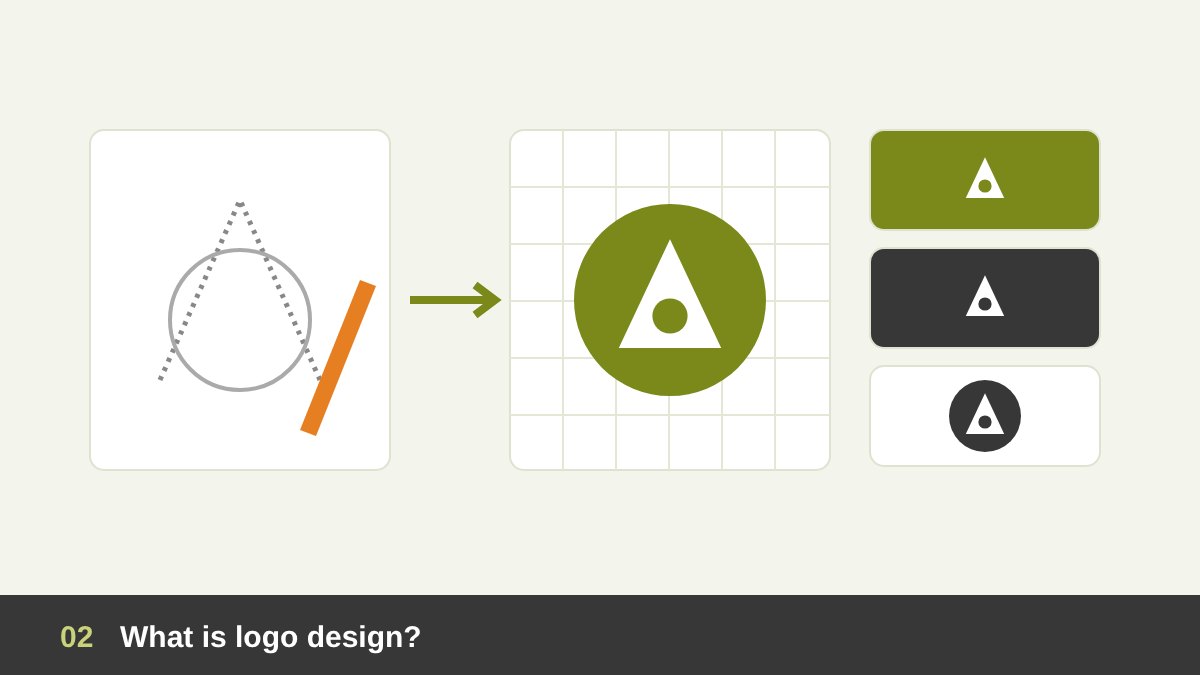
    Logo design process from sketch to vector logo with grid and color versions

    Logo design is the craft of creating a symbol, a wordmark or a combination of both that identifies a business. A good logo is simple, memorable, works in one color, and stays clear at very small and very large sizes, from a mobile app icon to a building sign. The main types are wordmarks (the name set in a special typeface), lettermarks (initials), pictorial marks (an icon), abstract marks, emblems and combination marks.

    A professional logo design project usually includes research, sketching, several concepts, refinement, and a final package: the main logo, horizontal and stacked versions, an icon, color and black-and-white versions, and files for print and web. That is a real piece of design work, but it answers only one question: how do people recognize your name?

    What Is Branding?

    Branding elements around a brand core: values, voice, audience, visual identity and experience

    Branding is much bigger. It is the process of shaping how people think and feel about a business. Branding starts with strategy: what the company stands for, who it serves, how it is different from competitors, and what personality and tone of voice it should have. From that strategy comes the visual identity, which includes the logo, but also colors, typography, imagery, icons, patterns and layouts.

    Branding also covers every point where a customer meets the business: the website, social media, packaging, the shop, the invoice, even the way the phone is answered. When all of these speak the same language, the business looks professional and becomes easy to remember. So when we compare branding vs logo design, the logo is a tool, and branding is the strategy and system that tells you how to use that tool.

    The Iceberg: The Logo Is Only the Tip

    Branding iceberg: the logo above water and brand strategy, values and experience below

    I like to explain branding vs logo design with the image of an iceberg. The logo is the small part above the water that everyone sees. Under the water is the much larger part that holds it up: the mission and values, the target audience, the positioning, the brand story, the tone of voice and the customer experience.

    A beautiful logo without this foundation is like a nice sign on an empty shop. It may look good in the portfolio, but it does not tell customers why they should choose you. On the other hand, a strong brand can make even a simple logo feel powerful, because people connect the mark with a clear promise and a consistent experience.

    Branding vs Logo Design: The Key Differences
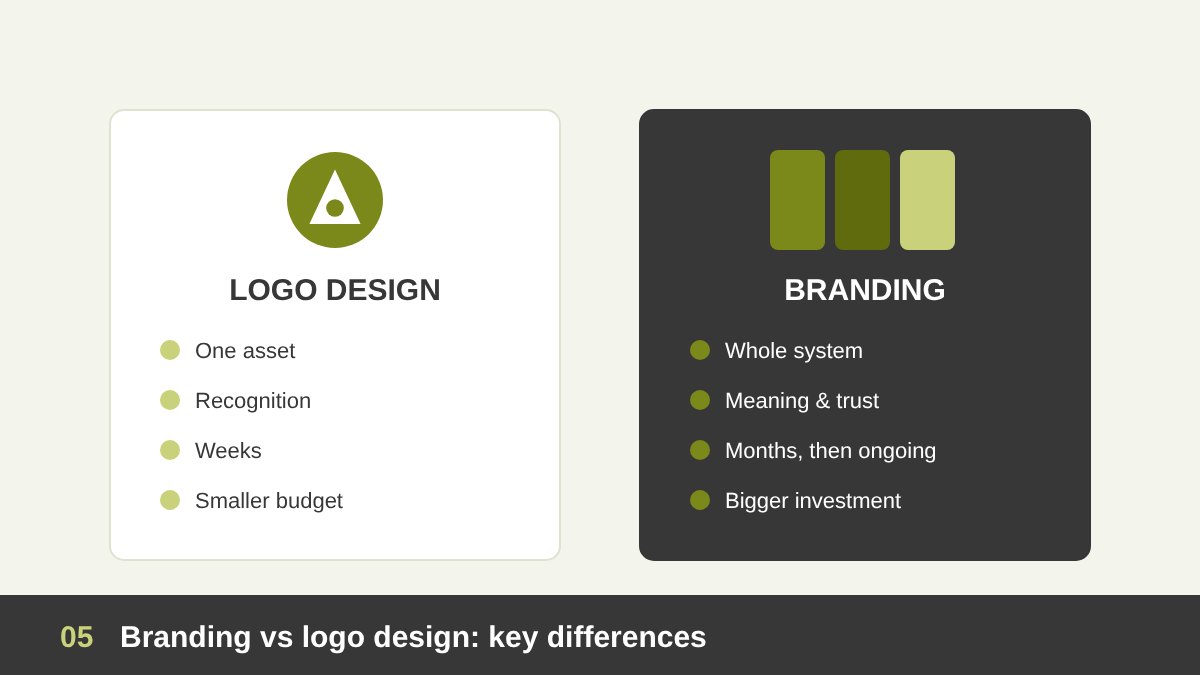
    Comparison of branding vs logo design in scope, purpose, deliverables and time

    Here is a quick summary of the main differences. The logo answers “who is this?”, while branding answers “why should I care, and what can I expect?”. A logo design project is focused and can be finished in a few weeks. A branding project is wider, takes longer, and continues to grow with the business.

    Logo designBranding
    What it isA symbol or wordmark that identifies the businessThe full system of strategy, identity and experience
    Main questionWho is this?Why should I choose them, and what can I expect?
    IncludesLogo versions, colors, file formatsStrategy, logo, colors, typography, imagery, voice, guidelines, applications
    TimeA few weeksSeveral weeks to months, then ongoing
    Best forNew ideas, events, small budgetsSerious launches, growth, rebranding, competitive markets
    Branding vs logo design at a glance

    What a Complete Brand Identity Includes
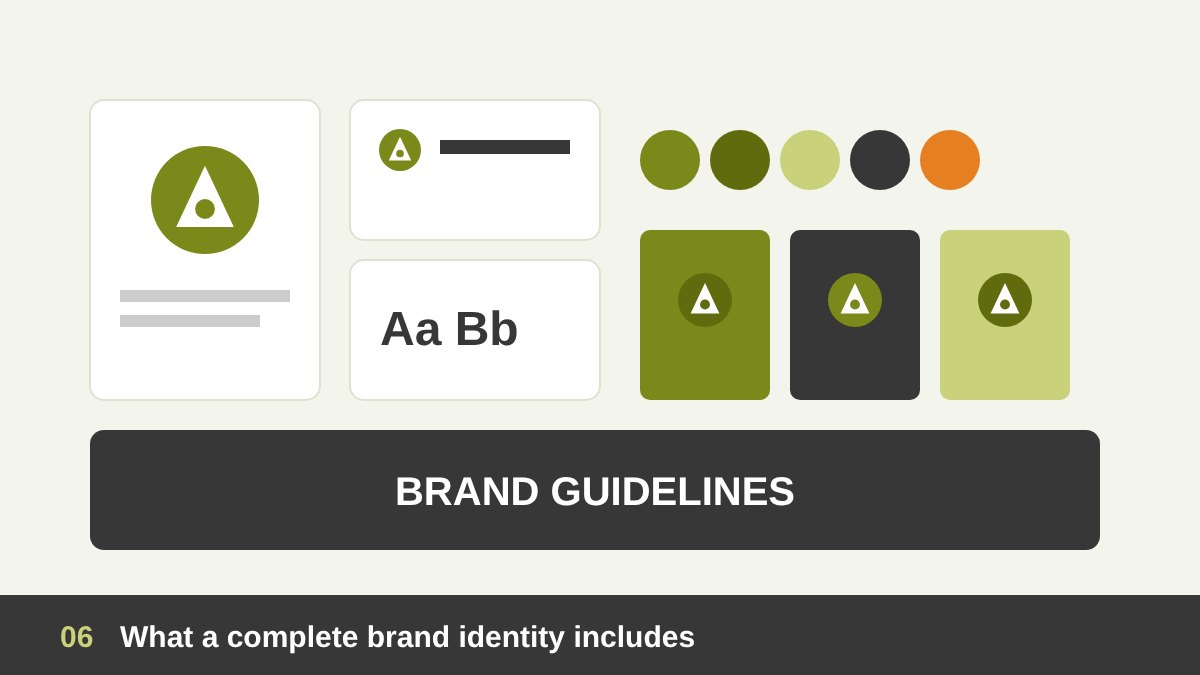
    Brand identity system: logo, color palette, typography, stationery, social media templates and brand guidelines

    When I deliver a brand identity, the logo is the first item in a much longer list. A complete visual identity usually includes the primary and secondary logos, a color palette with exact codes for print and screen, a typography system for headings and text, a photography or illustration style, icons and graphic patterns, and templates for business cards, letterheads, presentations and social media posts.

    All of this is collected in a brand guidelines book. The guidelines explain the rules: the clear space around the logo, what not to do with it, how to combine colors and fonts, and how the brand should look in different situations. This document is what keeps a brand consistent when many designers, printers and marketing teams work on it over the years.

    The Branding Process Step by Step
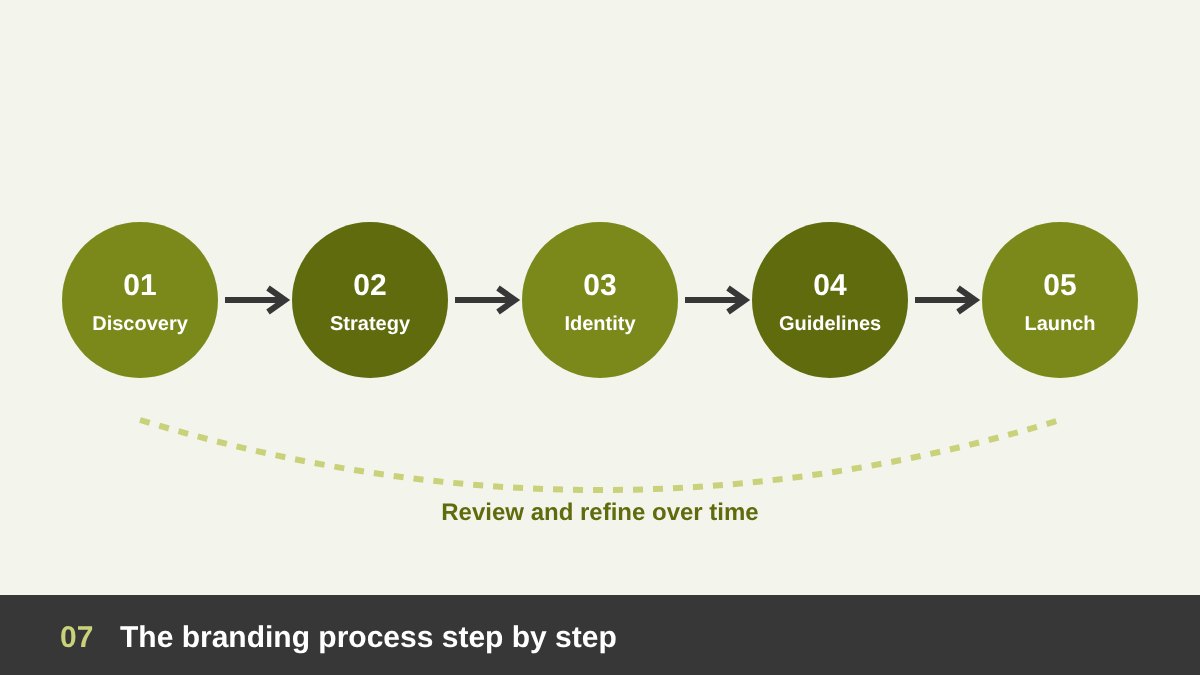
    Branding process steps: discovery, strategy, identity design, guidelines and launch

    A professional branding process normally moves through five stages. First comes discovery: interviews with the owner, research into the market, the audience and the competitors. Second is strategy: defining the positioning, the brand personality, the key messages and sometimes the name. Third is identity design, where the logo design and the full visual language are created together so they fit each other.

    Fourth is the brand guidelines, which turn the decisions into clear rules. Fifth is the launch and application: website, social media, signage, packaging and stationery. Good branding does not end at launch. The best brands are reviewed and refined over time, while staying recognizable. As an art director, this is where I spend most of my energy: making sure every new piece stays true to the brand. You can read more about that role in my article on the art of managing graphic design.

    The Logo Design Process
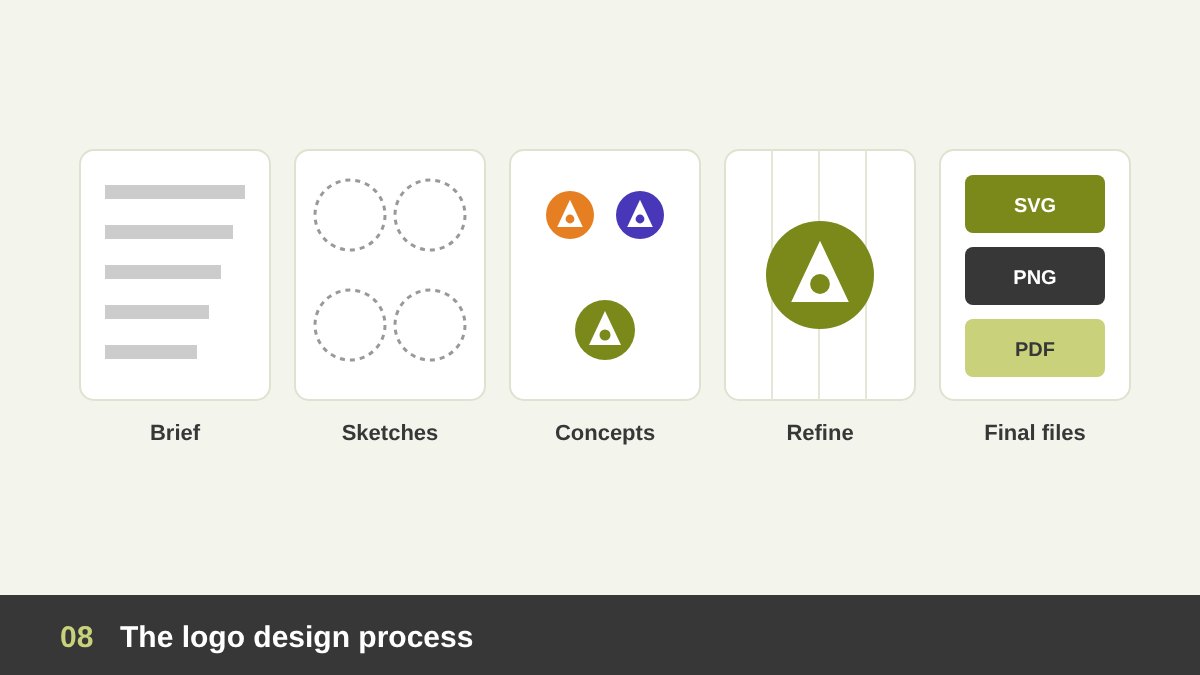
    Logo design process: brief, sketches, digital concepts, refinement and final files

    Logo design has its own process inside the branding process, or on its own when a client only needs a mark. It starts with a design brief: the name, the business, the audience, the feelings the logo should express and any colors or symbols to use or avoid. Then come pencil sketches, because ideas are faster on paper than on the computer.

    The strongest sketches become digital concepts, usually two or three directions, which are presented on real mockups so the client can imagine them in use. After feedback, one direction is refined: the shapes, the spacing, the typography and the color. Finally the logo is tested in small sizes, in one color and on dark backgrounds, and delivered in all the needed formats. You can see examples of both logo design and full brand identity projects in my logo and branding portfolio.

    When a Logo Is Enough and When You Need Branding
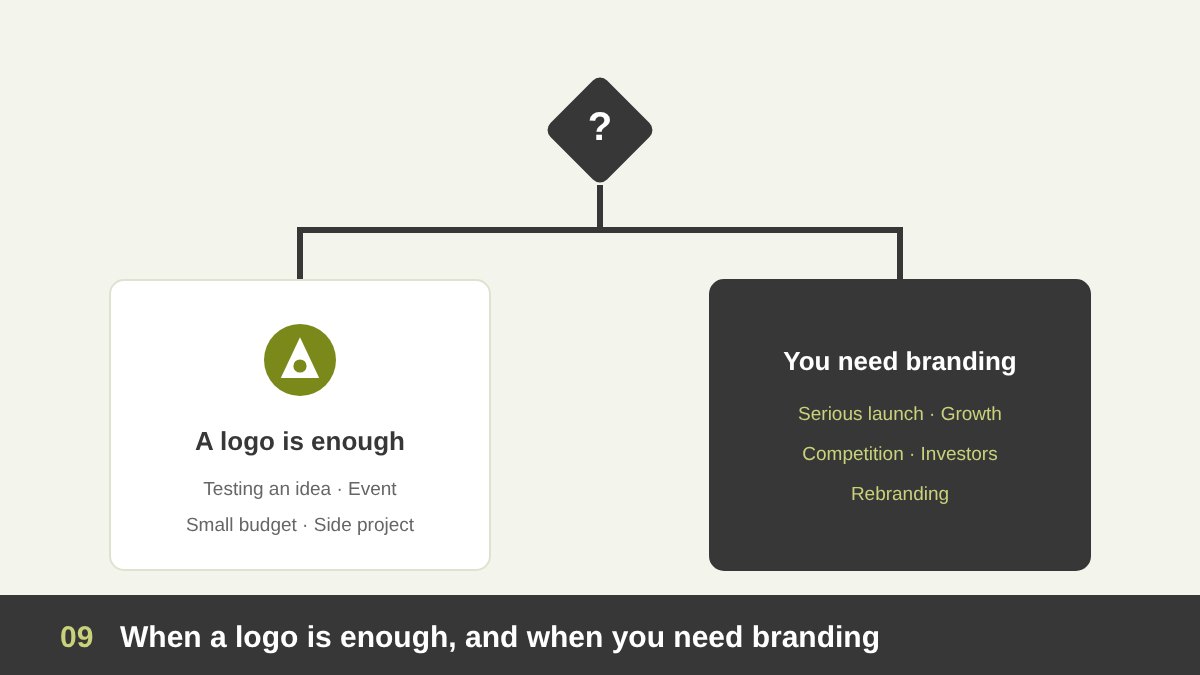
    Decision path: when you need only logo design and when you need full branding

    So, in the branding vs logo design decision, which one should you choose? A logo alone can be enough for a small start-up testing an idea, a personal side project, an event, or a business with a very small budget that needs to start quickly. In these cases, a clean, well-designed logo plus one or two colors is a good first step, and you can build the brand around it later.

    You need full branding when you are launching a serious company, entering a competitive market, raising prices, opening several branches, preparing for investors, or when your current look feels inconsistent and customers do not remember you. Branding is also essential for rebranding projects, when a company has grown and its old identity no longer represents it, like my Nagy Elsayegh rebranding project.

    Common Mistakes in Branding and Logo Design

    Common branding and logo design mistakes: copying trends, too many colors, no guidelines

    The most common mistake is designing the logo before knowing what the brand stands for. Without strategy, the logo design becomes a matter of personal taste, and decisions change with every opinion. Other mistakes are following trends that will look old in two years, using too many colors or fonts, choosing a logo that is too detailed to read at small sizes, and copying competitors instead of standing out from them.

    On the branding side, the biggest mistake is having no guidelines. A business spends money on a great identity, then every new flyer and post is designed in a different style, and the brand slowly loses its strength. Consistency is what turns design into recognition, and recognition into trust.

    How Much Do Branding and Logo Design Cost?

    Branding vs logo design cost and time: a small logo package compared with a full brand identity

    Prices vary a lot between countries, designers and agencies, so I will not give fixed numbers. What matters is the relationship between the two. A logo design project is the smaller investment, because the scope is limited to one asset and its versions. A branding project costs more because it includes research, strategy, a complete visual system, guidelines and often many applications.

    Think of it as an investment rather than a cost. A logo that has to be redone after a year, or a brand that nobody remembers, is far more expensive in the long run. When you compare offers, compare the deliverables and the process, not only the price, and ask to see real projects the designer has done.

    Final Thoughts: Start With the Brand, Then the Logo

    Start with brand strategy, then logo design, then consistent brand applications

    The difference between branding vs logo design is the difference between a part and the whole. Your logo is the face of your business, but your brand is its personality, its promise and its experience. The best results come when the logo design grows out of a clear brand strategy, and when the identity is applied consistently everywhere.

    If you are planning a new business or feel that your current identity no longer fits, start by answering the brand questions first, then design the logo. And if you want help with your logo design or a full branding project, get in touch with me. If you are a designer thinking about specialising in this area, my guide to graphic design job titles explains where brand identity designers fit in the design career ladder.

    Branding vs Logo Design: Frequently Asked Questions

    Is a logo the same as a brand?

    No. A logo is one visual element of a brand. The brand includes the strategy, the values, the personality, the visual identity and the experience customers have with the business.

    Should I design my logo or my branding first?

    Start with brand strategy, even a short one, then design the logo. The logo should express what the brand stands for, not the other way around.

    What is included in a branding package?

    Usually brand strategy, a logo with its versions, a color palette, typography, imagery style, graphic elements, stationery and social media templates, and a brand guidelines book.

    Can I start with only a logo and add branding later?

    Yes. Many small businesses start with a logo and a few colors, then invest in full branding when they grow. Just make sure the first logo is simple and flexible enough to build on.
  • Graphic Design Job Titles Explained: From Junior Designer to Creative Director

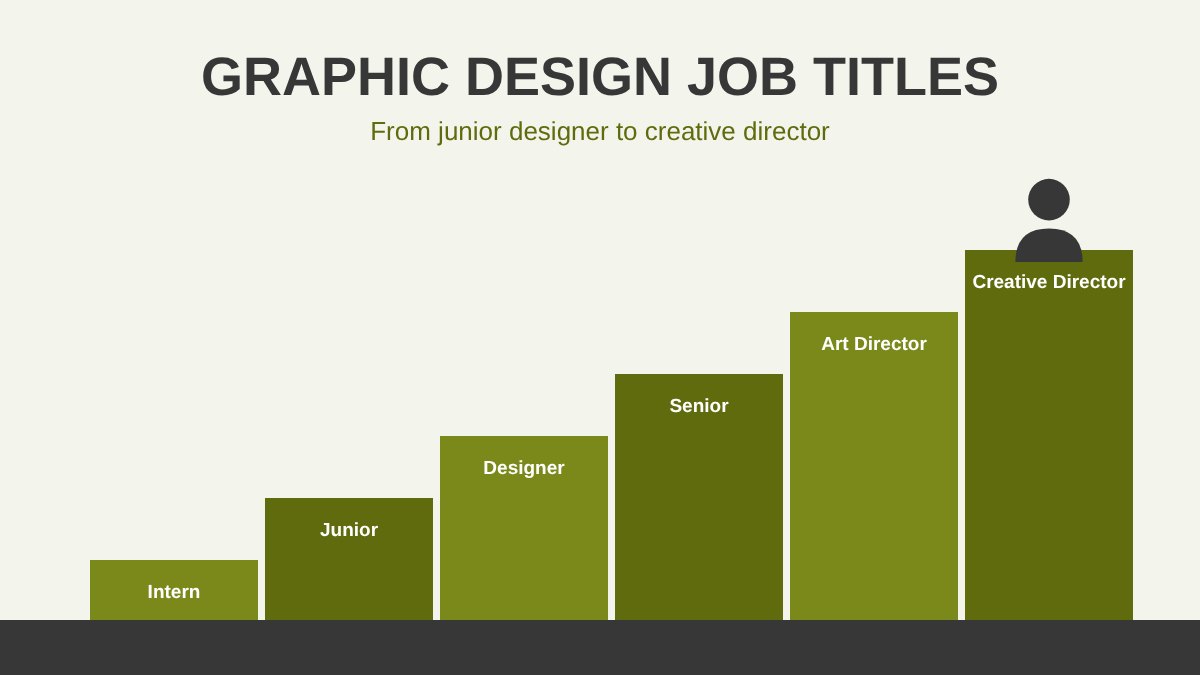
    Graphic Design Job Titles Explained: From Junior Designer to Creative Director

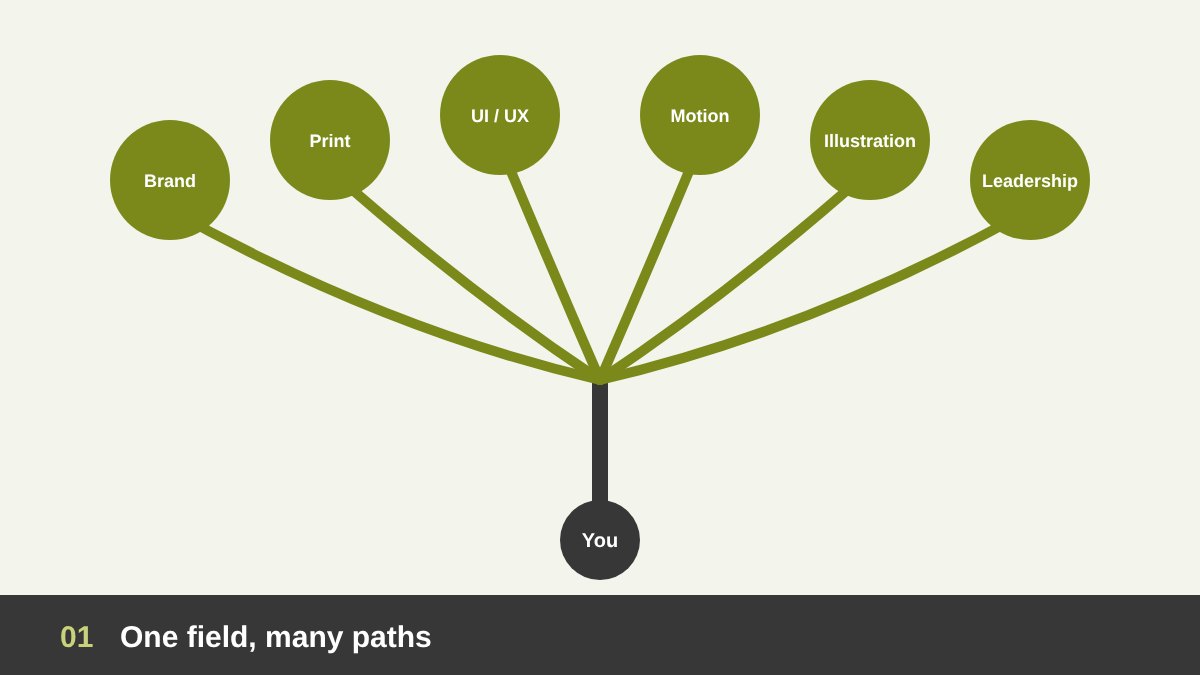
    One Field, Many Paths

    Graphic design career paths branching into brand, print, UI/UX, motion, illustration and leadership

    When people hear “graphic designer” they often imagine one job, but the field is really a tree with many branches. Two people with the same title can spend their days doing completely different work: one builds brand identities, another designs app screens, a third animates titles for television. Job titles in design also differ from one company to another, so a “senior designer” in a small agency may do the work of an art director in a big one. Understanding the common titles, what each role really does and how they connect helps you plan your career, write a better CV, and hire the right person when you are the one building a team. In this article I walk through the ladder from the first job to the top, and through the main specialisms along the way.

    Design Intern and Junior Graphic Designer

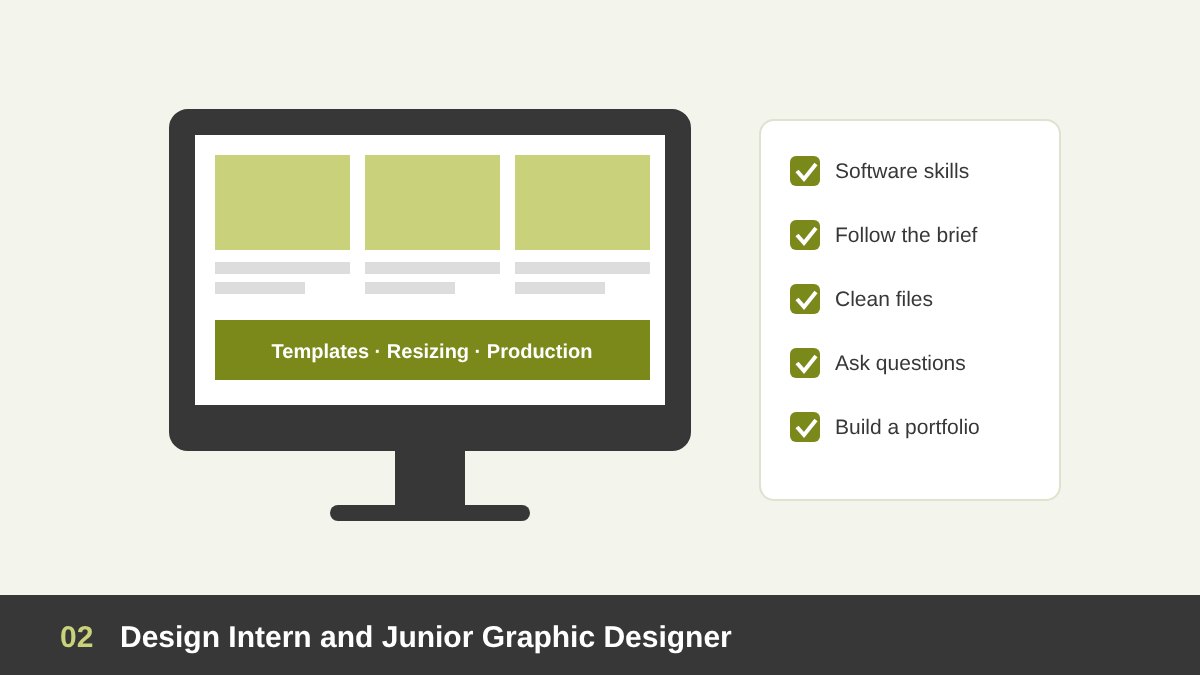
    Junior graphic designer at a monitor working on templates, resizing and production with a skills checklist

    Everyone starts here. A design intern or junior graphic designer usually has zero to two years of experience and works under the direction of a senior designer or art director. The daily work is practical: adapting existing designs to new sizes, preparing social media posts from templates, retouching photos, setting text, and getting files ready for print or web. It can feel like production more than creation, but this is where you learn speed, accuracy and the discipline of clean files. The most important skills at this level are mastering the software (Photoshop, Illustrator, InDesign, Figma), following a brief carefully, asking questions early, accepting feedback without taking it personally, and building a portfolio that shows real projects, not only student work.

    Graphic Designer

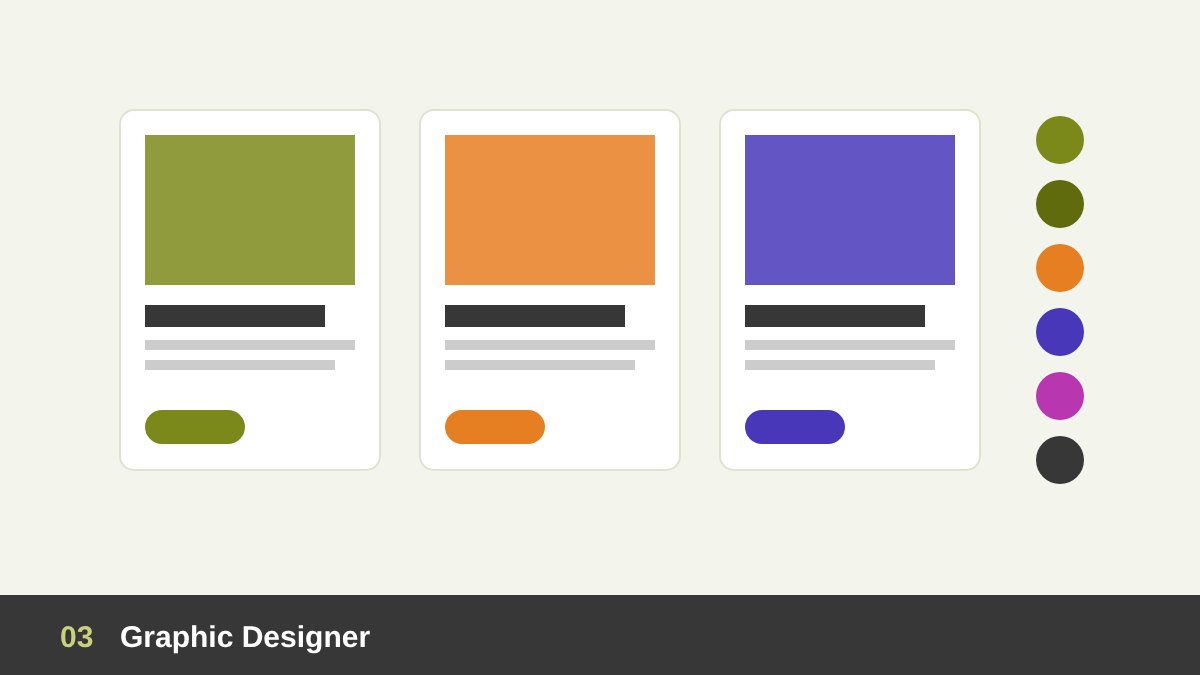
    Graphic designer creating several layout concepts with a brand color palette

    After two to four years, a designer is trusted to take a project from the brief to the final file with less supervision. A mid-level graphic designer creates original concepts, not just adaptations: posters, brochures, campaign visuals, social media designs, presentations and simple brand elements. They are expected to present two or three directions, explain the thinking behind them and handle client revisions. This is the stage where a designer develops a personal eye for typography, color and composition, and starts to notice which kind of work they enjoy most. Many designers stay at this level for years and build excellent careers, especially in in-house teams where they become the go-to person for a brand.

    Senior Graphic Designer

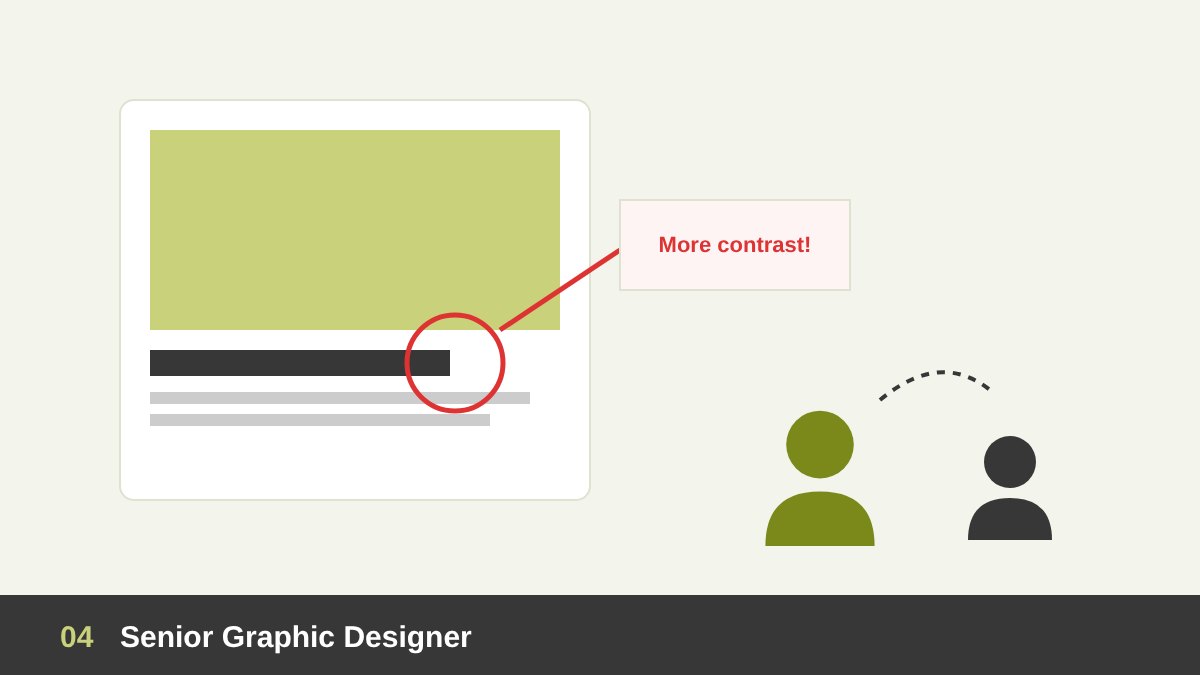
    Senior graphic designer reviewing a layout with feedback notes and mentoring a junior designer

    A senior graphic designer, usually with five or more years of experience, is defined less by software skill and more by judgment. Seniors lead bigger and more complex projects, solve design problems independently, keep consistency across many pieces of a campaign, and know how to balance creativity with deadlines and budgets. They also begin to lead people: reviewing the work of juniors, giving clear feedback, and teaching the team better methods. In many studios the senior designer is the bridge between the art director’s vision and the hands that execute it. If you enjoy this mentoring side, it is the first sign that a leadership path may suit you.

    Brand and Visual Identity Designer

    Brand identity designer work: logo, business card, letterhead and brand color swatches

    One of the most respected specialisms is brand identity design. A brand designer creates the visual system of a company: the logo, color palette, typography, patterns, photography style and the brand guidelines book that tells everyone how to use them. The work starts with research into the company, its audience and its competitors, and it ends with a complete toolkit: business cards, letterheads, envelopes, folders, signage and digital templates. Titles in this area include Brand Designer, Identity Designer, Logo Designer and Brand Strategist when the role includes naming and positioning. A good brand designer thinks in systems, not single images, because the identity has to work everywhere for many years.

    Print, Layout and Packaging Designer

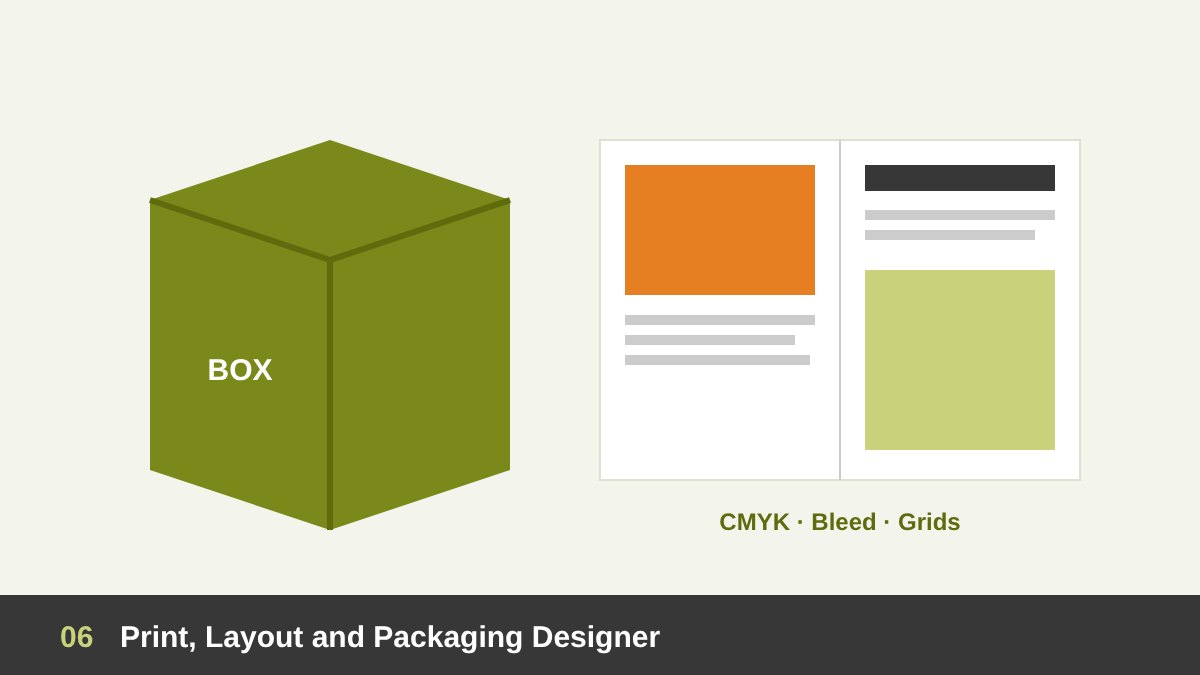
    Packaging box design and a magazine layout spread with grids, CMYK and bleed

    Print is far from dead, and it has its own specialists. A layout or publication designer works on magazines, books, annual reports, catalogs and menus, where grids, hierarchy and long-form typography matter most. A packaging designer creates boxes, labels and bags, which means understanding dielines, materials, folding and how a product looks on a crowded shelf. A prepress or production artist makes sure files are technically perfect for printing: CMYK colors, bleed, resolution, overprint and color proofs. These roles reward patience and precision, and a designer who truly understands print production is always valuable, because mistakes on press are expensive.

    UI / UX and Web Designer

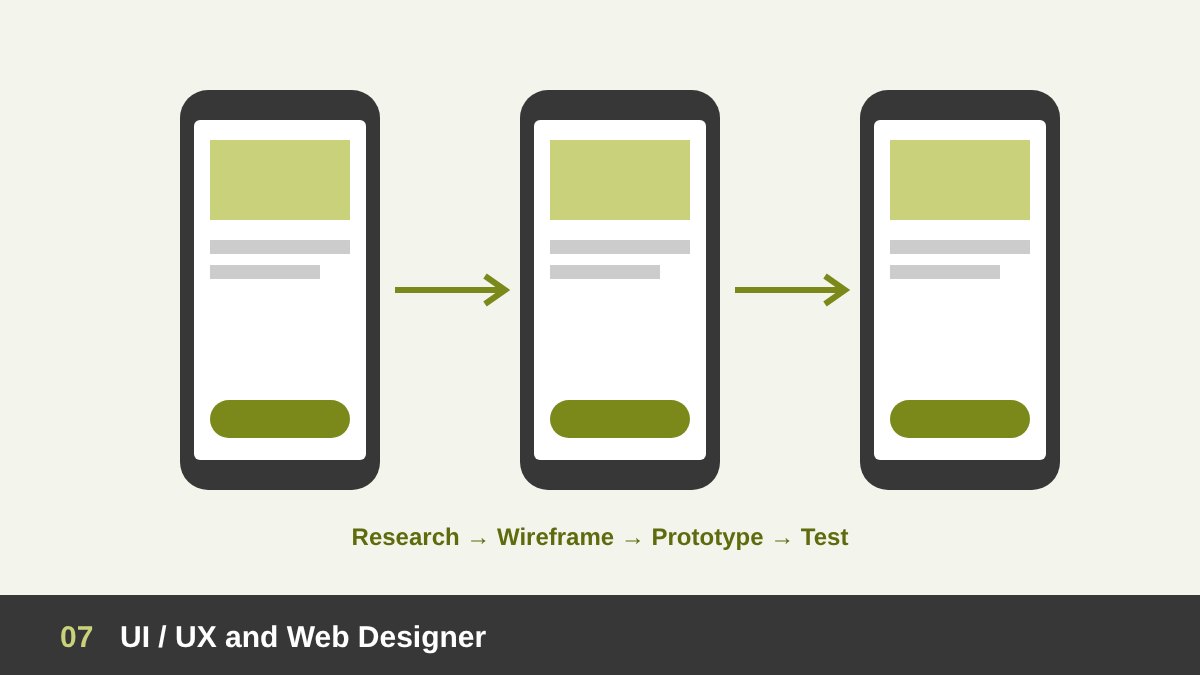
    UI UX design flow: three mobile screens connected from research and wireframe to prototype and test

    Digital products created a whole family of design titles. A web designer designs websites and landing pages, often with some knowledge of HTML, CSS and platforms like WordPress. A UI (user interface) designer focuses on how screens look: buttons, icons, layouts and design systems for apps and websites. A UX (user experience) designer focuses on how a product works: research, user journeys, wireframes, prototypes and usability testing. In bigger companies you will also find Product Designer, Interaction Designer and UX Researcher. Graphic designers moving into this area need to learn tools like Figma, think about real users and data, and accept that a design is never finished but always improved through testing.

    Motion Graphics Designer

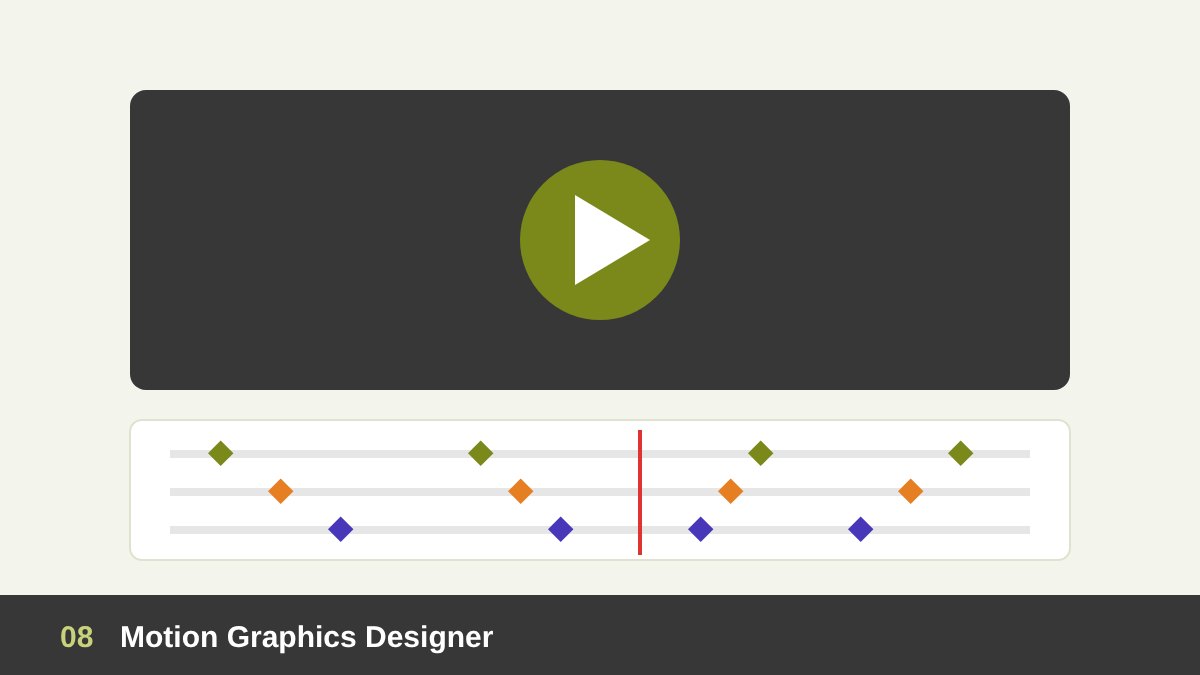
    Motion graphics designer timeline with keyframes and a video play button

    When design starts to move, it becomes motion graphics. A motion designer animates logos, typography, infographics, explainer videos, social media ads, title sequences and broadcast graphics. The usual tools are After Effects, Premiere, Cinema 4D or Blender, and the key skills are timing, rhythm and storytelling, not only good-looking frames. Related titles include Animator, 2D/3D Motion Designer, Video Editor and Broadcast Designer. Because video now dominates social media and advertising, motion designers are in high demand, and a graphic designer who adds animation to their skills can multiply the value of every design they make.

    Illustrator and Social Media Designer

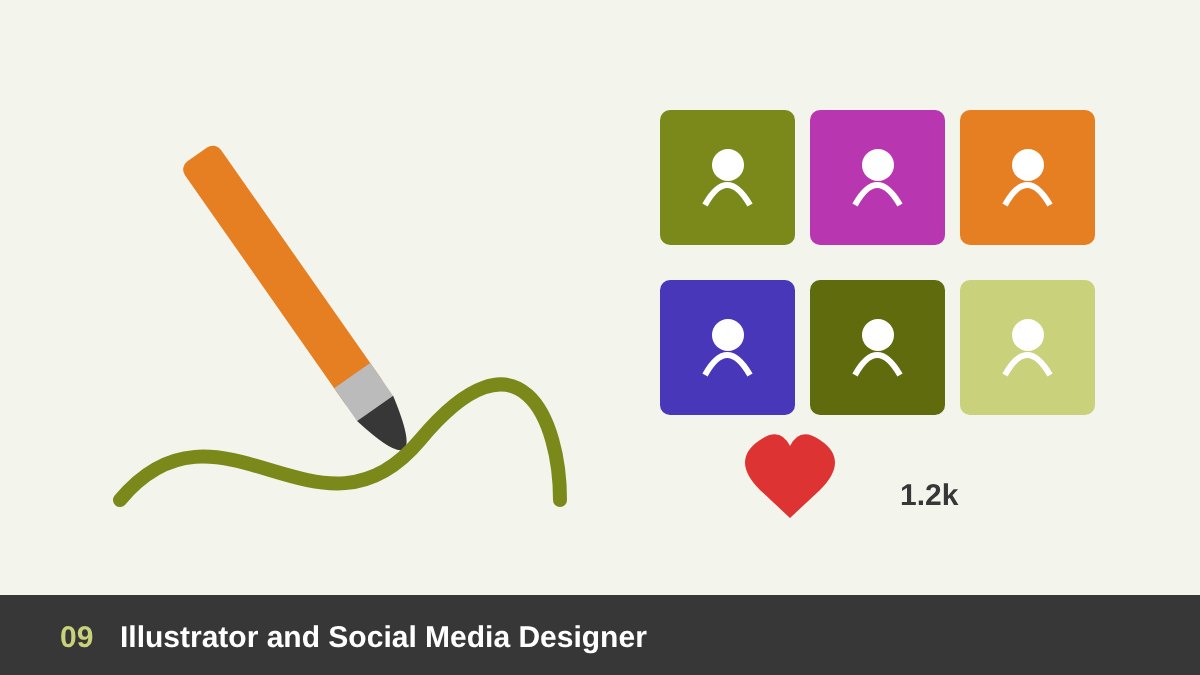
    Illustrator brush drawing a line next to a grid of colorful social media post designs

    Some designers build their careers on drawing. An illustrator creates original images for books, editorials, packaging, advertising and brands, by hand or digitally, and often develops a recognizable personal style. Close to this are the Concept Artist in games and film, the Character Designer, and the Storyboard Artist. On the other side, the Social Media Designer has become a title of its own: someone who creates fast, eye-catching content for Instagram, Facebook, TikTok and LinkedIn, understands each platform’s formats, and works closely with marketing teams on campaigns and performance. Both roles depend on producing a lot of good work quickly while keeping a consistent visual voice.

    Lead Designer and Art Director

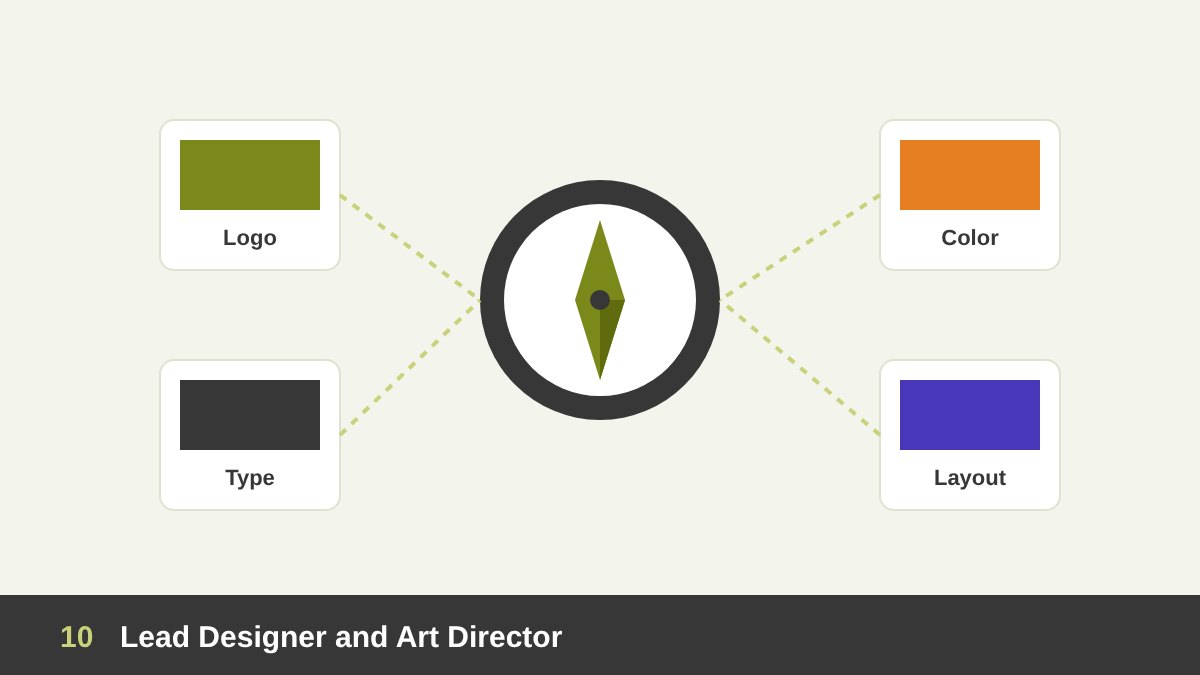
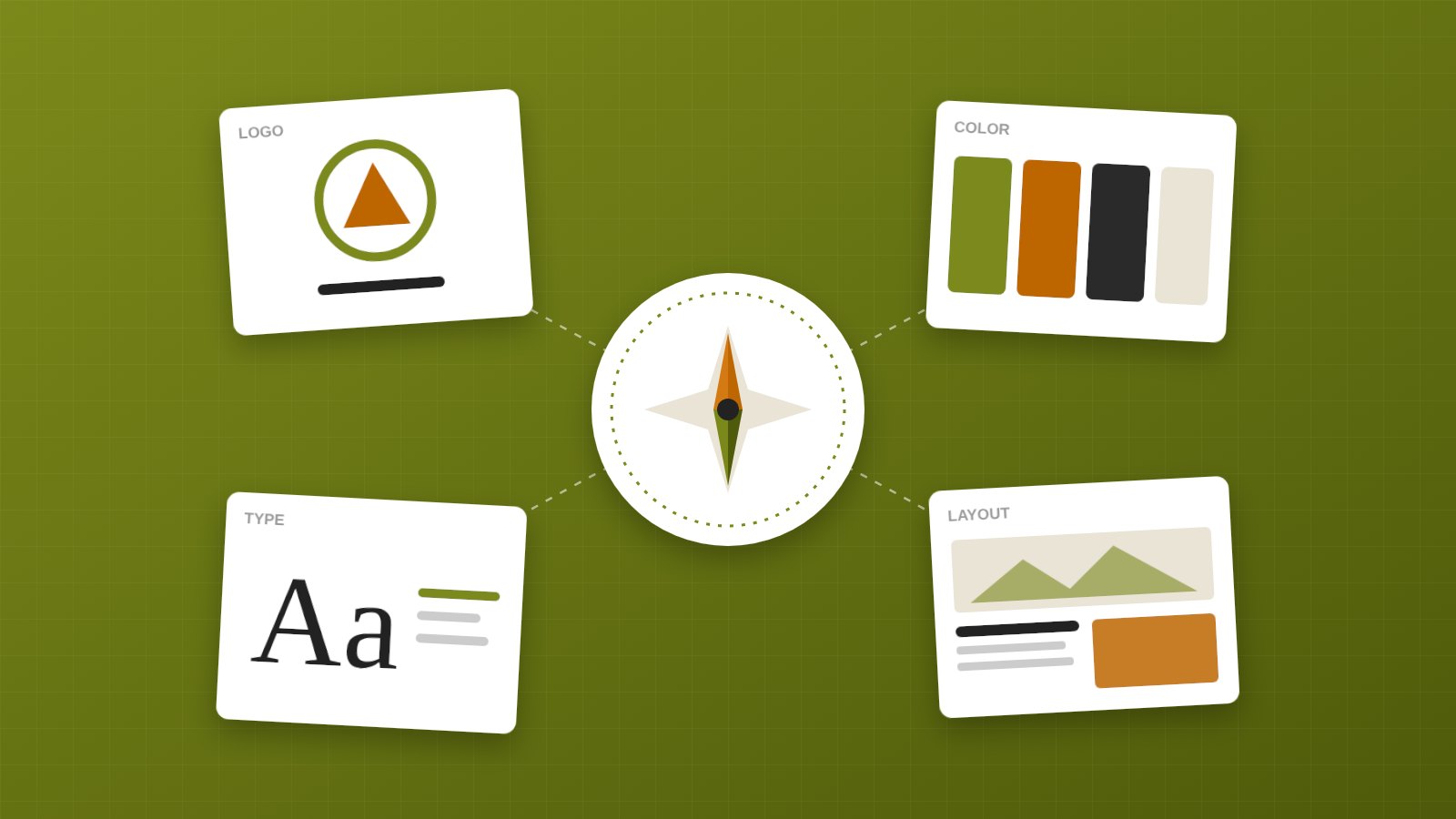
    Art director compass guiding logo, typography, color and layout design cards

    The first real leadership titles are Lead Designer and Art Director. A lead designer is the most experienced designer on a team or project, still designing every day, but also setting standards and organizing the work. An art director owns the visual direction of a brand, campaign or publication: writing the creative direction, choosing styles, guiding designers, photographers and illustrators, and reviewing everything before it reaches the client. The art director spends less time on the computer and more time on concepts, presentations and decisions. It is a role I know well, and the biggest change is that success is measured by the quality of the whole team’s work, not by your own designs.

    Creative Director and Head of Design

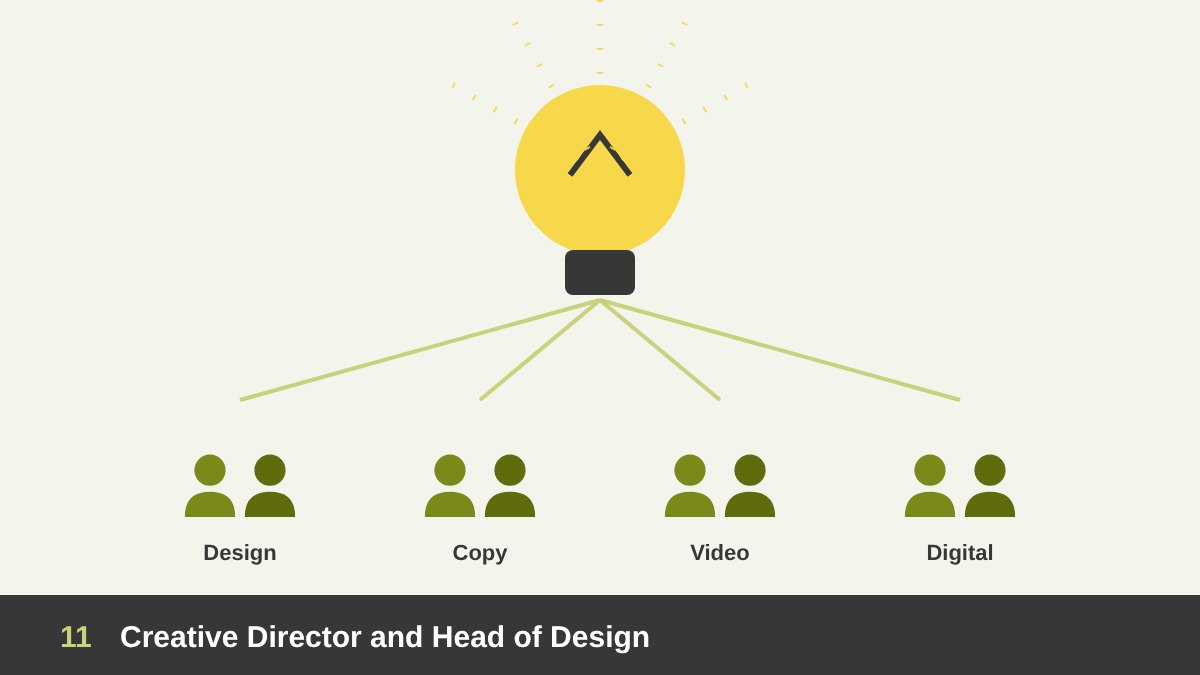
    Creative director idea light bulb leading design, copy, video and digital teams

    At the top of the ladder are the Creative Director, Design Director and Head of Design. A creative director leads the overall creative vision of an agency or company, across design, copywriting, video and digital, and is responsible for the big ideas behind campaigns. A design director or head of design manages several teams and art directors, sets processes and hiring plans, controls budgets, and represents design in meetings with management and clients. In agencies you may also find Executive Creative Director and Chief Creative Officer. These roles need strong business understanding, communication and leadership as much as design talent, because the job is to create the conditions in which many people can do their best creative work.

    Choosing Your Path

    Signpost with design career directions: specialist, leadership, freelance studio and teaching

    There is no single right path up the ladder. Some designers become deep specialists and stay hands-on all their lives as senior brand, motion or UI designers, and they are highly paid for it. Others enjoy people and ideas and move toward art direction and creative leadership. Many build their own freelance practice or studio, where they wear every hat at once, and some, like me, combine practice with teaching and research. Whatever you choose, the principles stay the same: keep learning new tools, build a portfolio that shows thinking and not only results, understand the business side of design, and stay curious. The title on your card will change many times; your eye and your way of solving problems are what really carry your career forward.

  • The Art of Managing Graphic Design: Lessons from the Art Director’s Chair

    The Art of Managing Graphic Design: Lessons from the Art Director’s Chair

    From Designer to Decision Maker

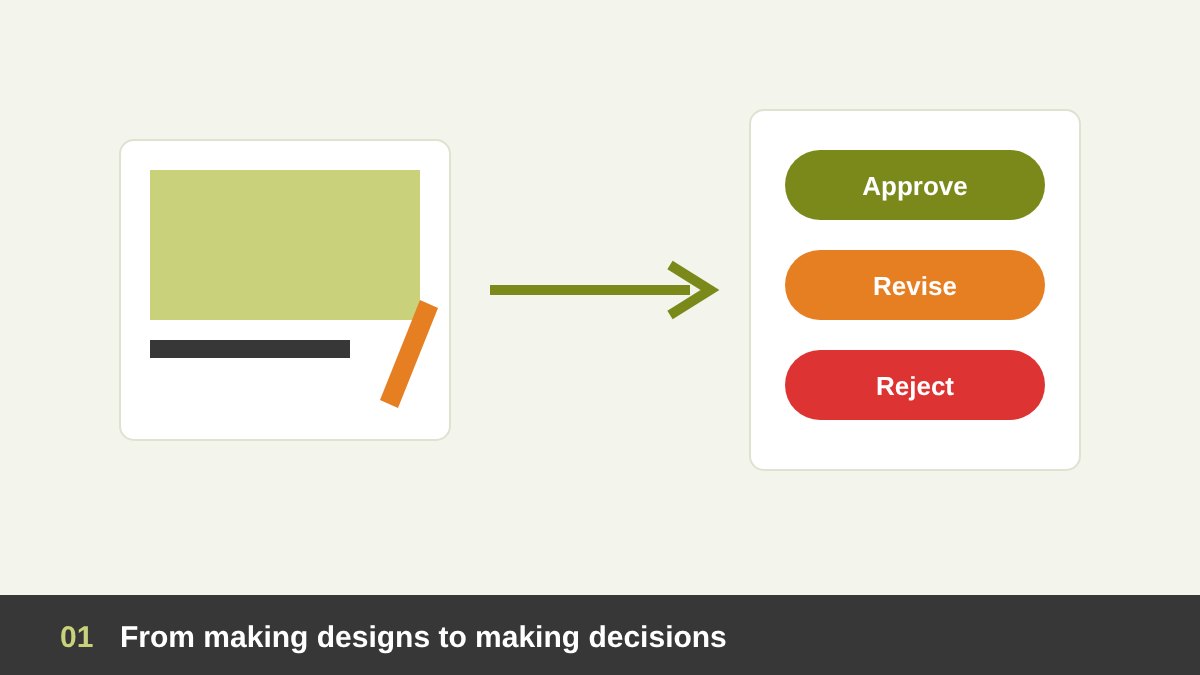
    Designer artboard turning into approve, revise and reject decisions

    Being an art director is not about being the best designer in the room; it is about making the whole room design better. When I moved from designing every piece myself to leading a team, the first lesson I learned was that my job had shifted from making things to making decisions. An art director holds the creative vision of a brand or a campaign and makes sure that every logo, poster, screen and video speaks with one voice. The tools are the same Photoshop and Illustrator we all know, but the real work happens in conversations, sketches on paper and the questions we ask before anyone opens a file.

    A Clear Brief and a Direction Board

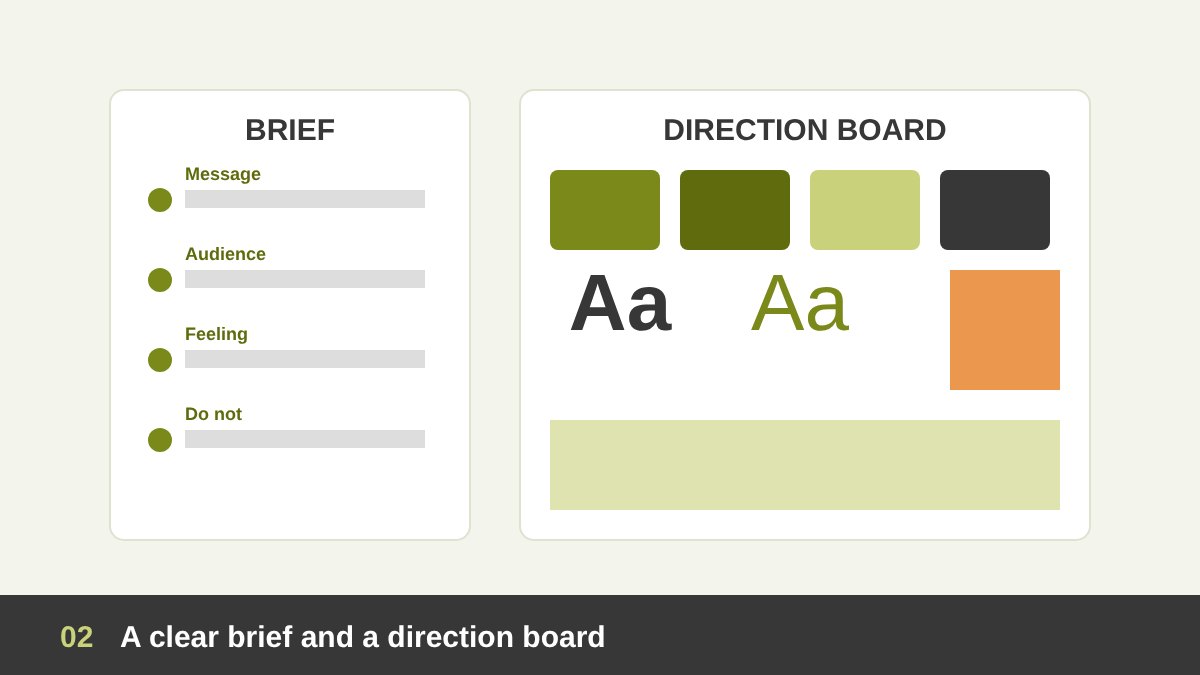
    Creative brief next to a direction board with colors, typefaces and references

    The heart of managing graphic design is a clear brief and a clear direction. A designer who knows the goal, the audience and the feeling we want to create will make better choices than one who is simply told to “make it pop.” Before any project starts, I build a simple direction board: the message in one sentence, a short color palette, two typefaces at most, a few reference images and the things we will not do. This board becomes the compass for the team. It saves hours of revisions, because every idea can be checked against it, and it gives designers the freedom to experiment inside a shape everyone understands.

    Building the Right Team

    Design team members with different strengths: typography, illustration and systems

    A strong team is built, not hired. Every designer has a natural strength: one sees typography the way a musician hears rhythm, another is a master of illustration, a third thinks in systems and grids. Part of the art director’s job is to know these strengths and to put the right person on the right task, while pairing people so they learn from each other. When I led a small team of three designers, the biggest jump in quality did not come from new software; it came from letting each person own the part of the project they did best and then bringing those parts together under one direction.

    A Process That Turns Talent into Results

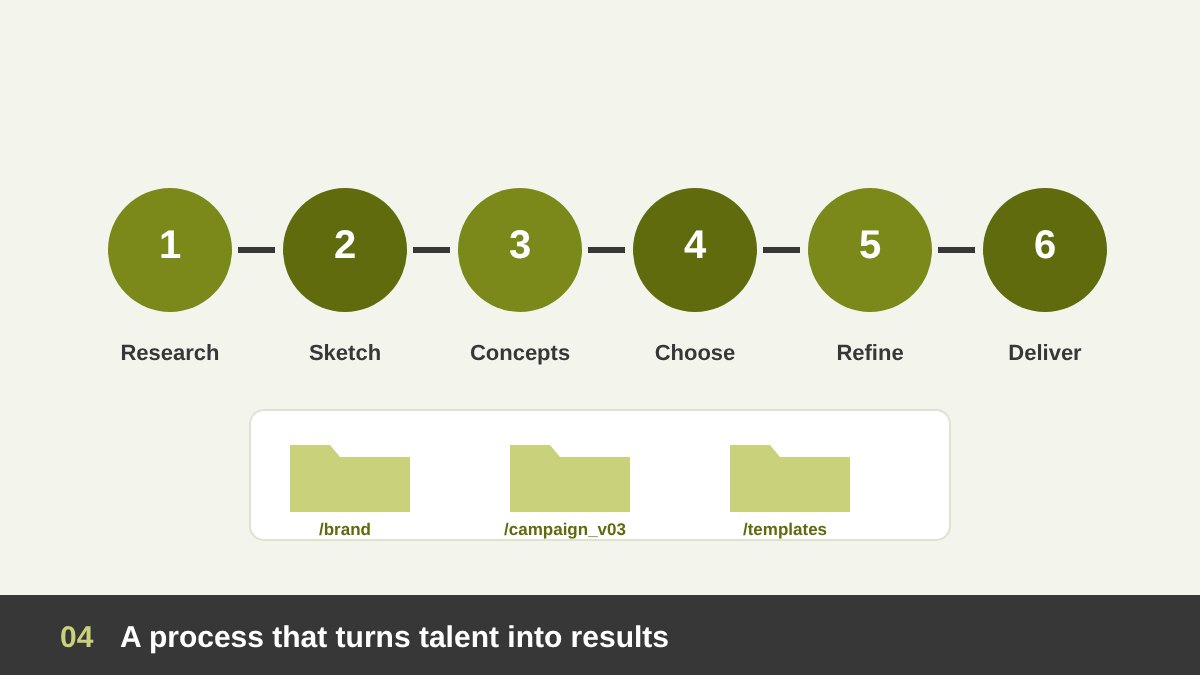
    Six design process stages from research to delivery with organized project folders

    Process is what turns talent into reliable results. I split every project into clear stages: research and references, rough sketches, two or three concept directions, one chosen direction, refinement, and final delivery. Each stage ends with a short review, so we never discover at the last minute that the whole idea was wrong. Simple habits make a big difference too: one shared folder structure, clear file names with version numbers, master templates for repeated work, and a living brand guideline that everyone can open. Order in the files creates calm in the team, and calm teams make better design.

    The Art of Feedback

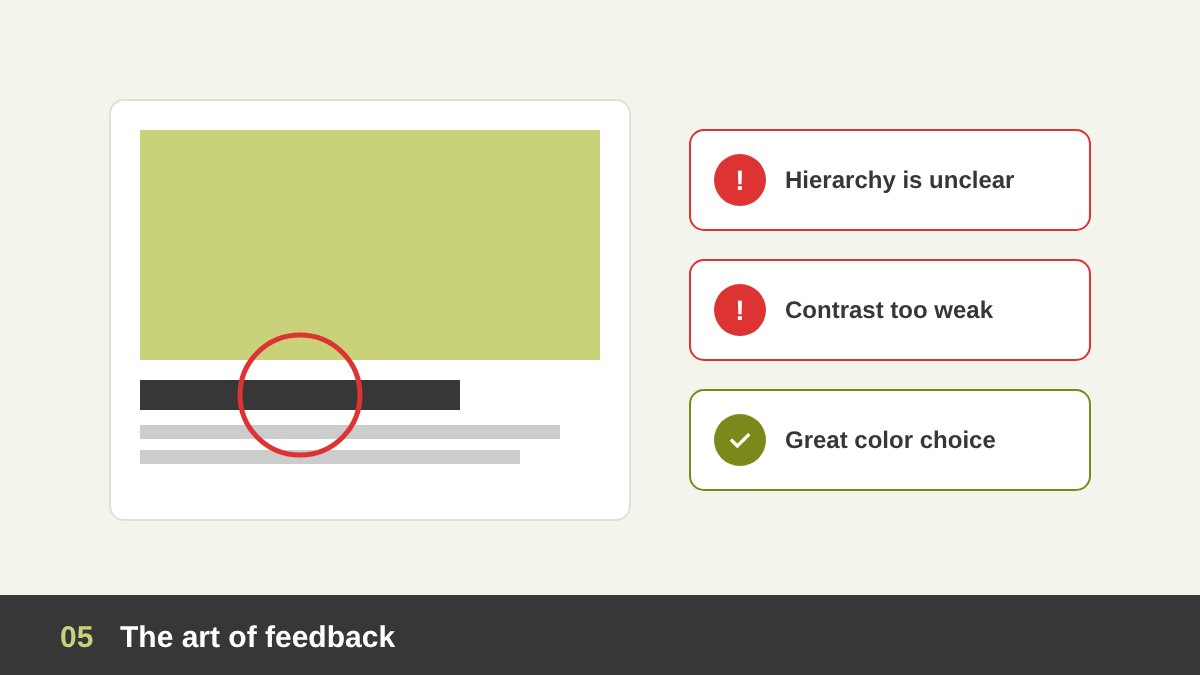
    Design critique with specific notes on hierarchy, contrast and color

    Feedback is where an art director earns their title. Good critique is specific, honest and always about the work, never the person. Instead of saying “I don’t like it,” I try to explain why: the hierarchy is unclear, the contrast is too weak, the logo is fighting with the headline. I also make sure designers hear what works, because people repeat what is praised. A healthy team needs a balance between protecting the brand standards and leaving space for each designer’s own voice; the best results I have seen came from designers who felt trusted enough to surprise me.

    Protecting Creativity

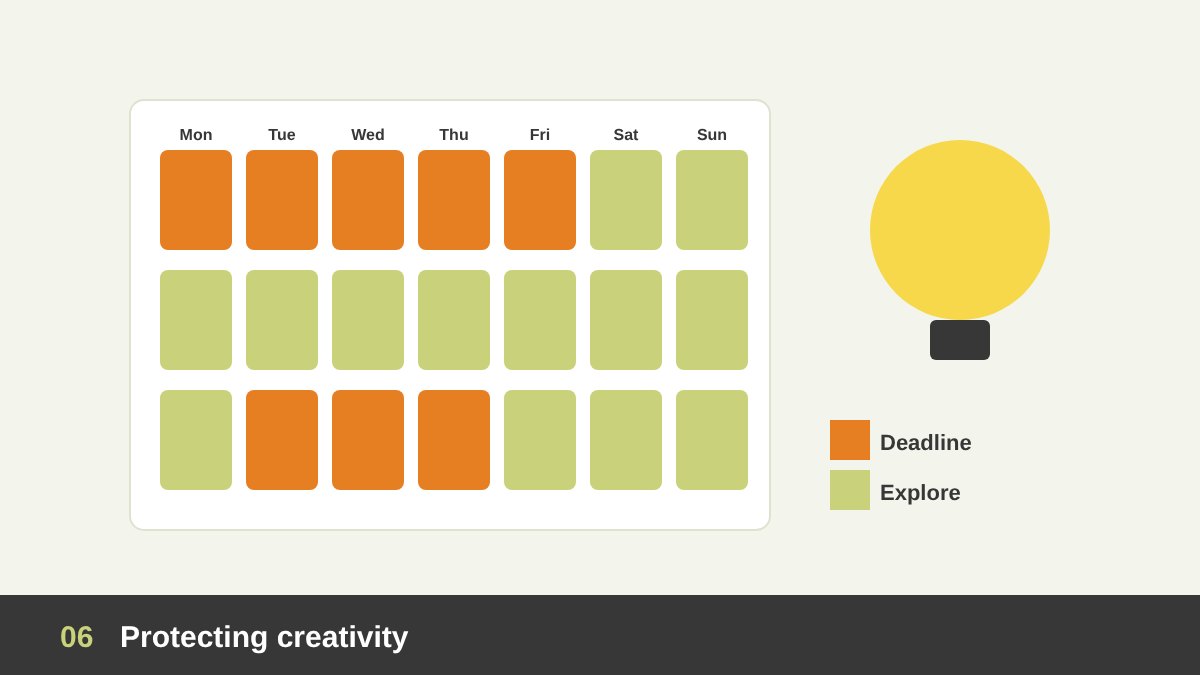
    Team calendar balancing deadline weeks with days for exploration

    Managing creative people also means protecting their creativity. Designers burn out when every task is urgent and every idea is rejected without discussion. I try to keep a rhythm where intense deadline weeks are followed by lighter days for exploration, sketching or learning a new technique. Teaching has shown me that people grow fastest when they understand the reason behind a rule, so I explain the principles of composition, color and type behind my decisions instead of just giving orders. A designer who understands the why will one day be able to direct a project on their own, and that is the real success of a leader.

    Between the Team and the Client

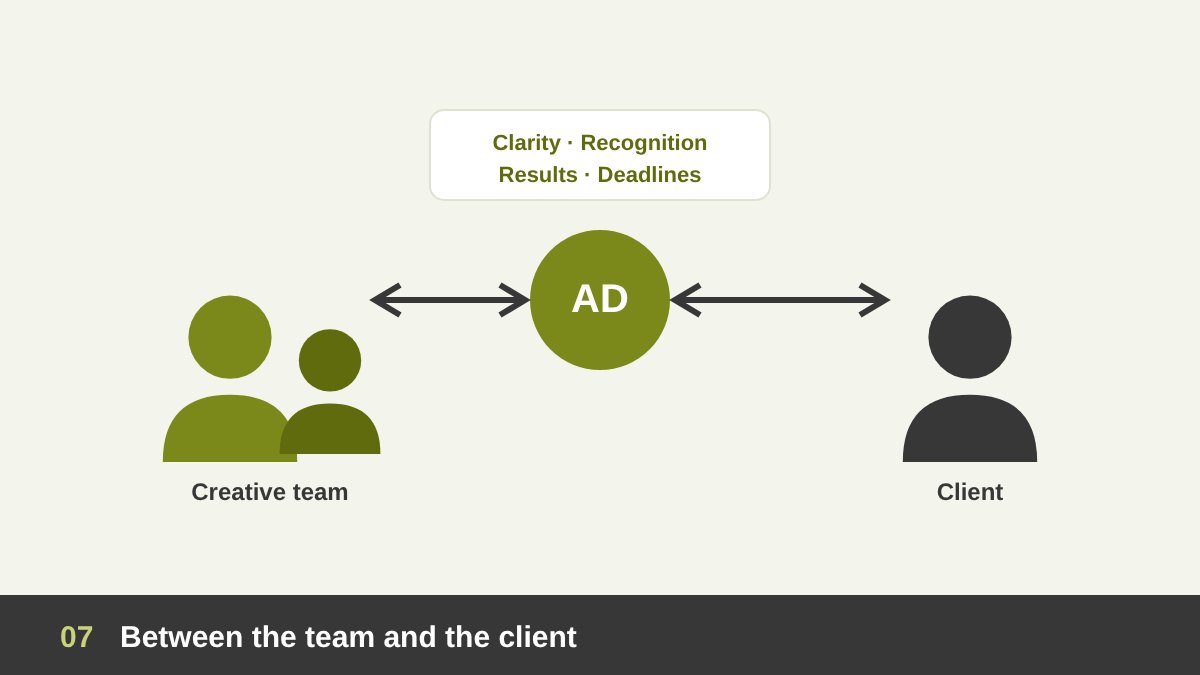
    Art director connecting the creative team and the client

    An art director also stands between the creative team and the client, and has to speak both languages. That means defending good ideas with reasons the client cares about, such as clarity, recognition and results, and accepting when a business need is more important than a personal taste. It means presenting work with a story, not just showing images, and guiding the client to give feedback on goals instead of on colors they happen to like that day. It also means managing time and energy: setting realistic deadlines, splitting big projects into stages and knowing when a design is finished.

    New Tools, Same Judgment

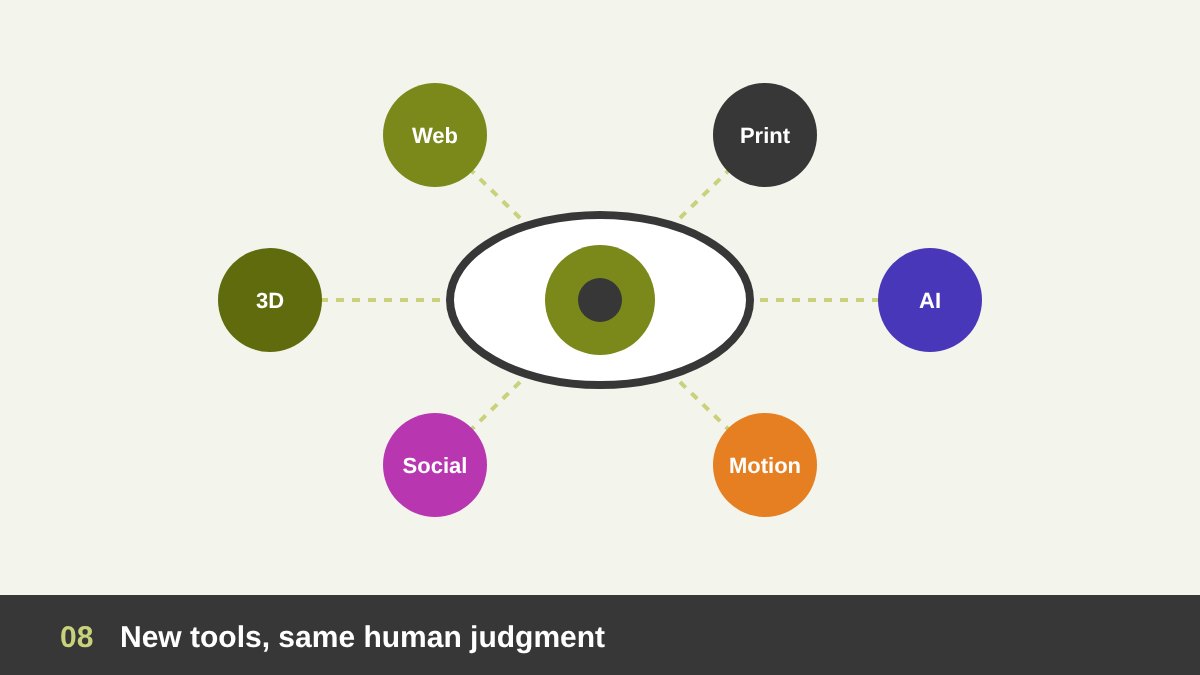
    Human eye at the center of AI, motion, social, 3D, web and print tools

    Finally, the role keeps changing with the tools. New software, motion design, social media formats and now AI image generation can produce more options faster than ever, but they cannot decide which option is right for the brand. That judgment is exactly what art direction is about. The art director of today must stay curious, test new tools with the team, and keep the human eye at the center of every decision. Art direction is a craft of balance between vision and practicality, freedom and discipline, art and business, and learning that balance is what turns a talented designer into a creative leader.